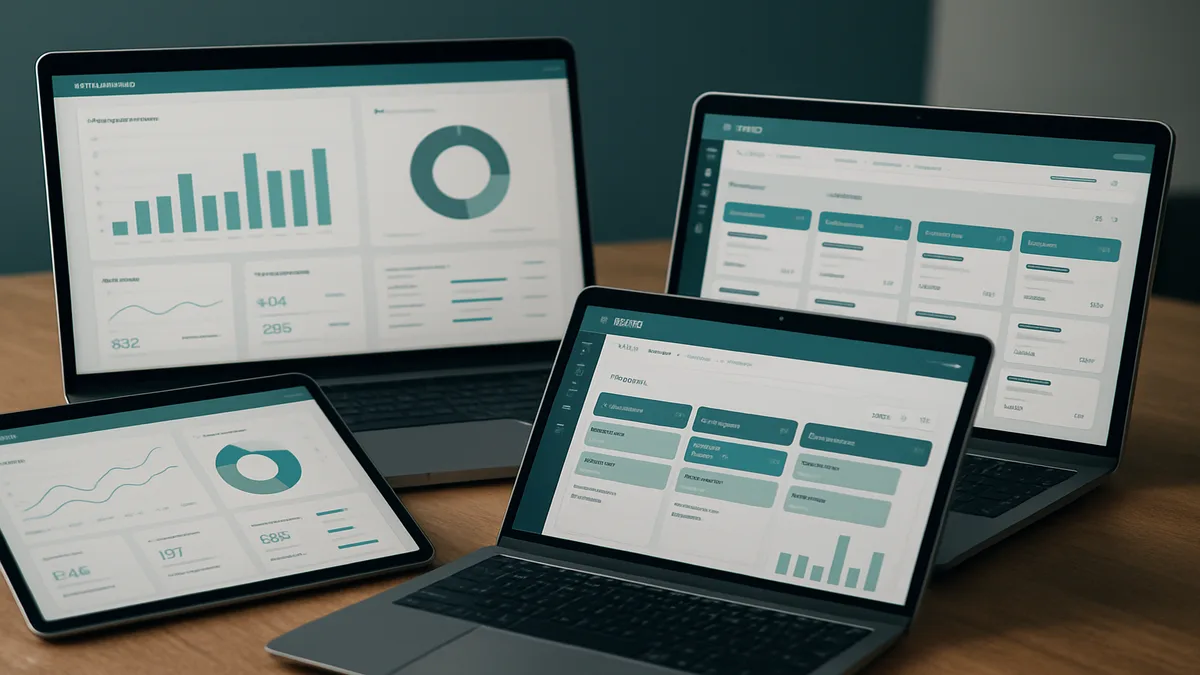
15,820 hotel projects representing 2.4 million rooms. That’s the global hotel construction pipeline as of Q4 2024 — an all-time record. Add a $12-15 billion PIP renovation backlog, record U.S. pipeline of 6,378 projects, and a Middle East boom that’s grown from 300 to 1,000+ exhibiting hotel suppliers in just two years, and the picture is clear: demand for hotel products has never been higher.
The question for suppliers isn’t whether hotels are buying. It’s whether hotels are buying from you.
Most hotel product suppliers rely on one or two lead generation channels — typically trade shows and existing relationships. That’s a brittle pipeline. When a trade show underperforms or a key contact moves companies, lead flow drops to zero.
This guide covers 12 strategies for generating qualified hotel supplier leads, each with implementation steps and estimated ROI. Some are established best practices. Others reflect where the market is heading. Together, they create a pipeline that doesn’t depend on any single channel.
Strategy 1: Hotel Renovation Monitoring
What it is: Systematically tracking hotel renovation signals — PIP issuances, construction permits, brand conversion announcements, ownership changes — to identify hotels that are actively entering procurement cycles.
Why it works: A hotel in the middle of a PIP renovation has a non-negotiable deadline to purchase products that meet brand standards. They’re not browsing — they’re buying. Renovation-triggered leads convert at 3-5x the rate of cold outreach because the need is immediate and budget is allocated.
The scale of opportunity:
- PIP backlog: $12-15 billion in outstanding renovation requirements
- Guest room renovation costs: $8,000-$25,000 per room
- PIP costs up 30%+ versus pre-COVID levels
- U.S. pipeline at an all-time record of 6,378 projects (Q4 2024)
Implementation steps:
- Monitor construction permit databases in your target markets (county-level filings are public record in most U.S. jurisdictions)
- Track brand conversion announcements (Hilton’s Spark surpassed 100 hotels by 2024; IHG’s Garner targets 500 hotels in 10 years — every conversion needs new FF&E)
- Set Google Alerts for “[hotel name] renovation,” “[brand] PIP,” and “[city] hotel construction”
- Monitor STR and Lodging Econometrics pipeline reports for new project announcements
- Build a CRM workflow that tags leads by renovation stage: announced, permitted, under construction, nearing completion
Estimated ROI: High. Renovation-triggered outreach produces the highest conversion rates in hotel sales. The challenge is the manual effort required to monitor signals across thousands of properties.
Strategy 2: LinkedIn Prospecting
What it is: Using LinkedIn to identify, connect with, and engage hotel procurement decision-makers through targeted outreach and content engagement.
Why it works: Hotel procurement directors, VPs of purchasing, and management company executives are active on LinkedIn. It’s where they share industry news, announce job changes, and evaluate vendors. Unlike email, LinkedIn messages have a personal context (mutual connections, shared groups, profile information) that enables relevant outreach.
Implementation steps:
- Build your target list. Use LinkedIn Sales Navigator to filter by title (Director of Procurement, VP of Purchasing, Chief Procurement Officer), industry (Hospitality), and company size. Layer in geographic filters for your serviceable regions.
- Optimize your company and personal profiles. Your profile headline should state what you sell and to whom, not your job title. “FF&E manufacturer serving 200+ hotel properties” beats “Sales Director at XYZ Company.”
- Engage before pitching. Comment on your target buyer’s posts, share their content, and engage in industry group discussions for 2-3 weeks before sending a connection request. Warm outreach converts 4-6x better than cold.
- Connection request formula: Reference something specific — a post they shared, a project their company announced, or a mutual connection. Keep it under 300 characters. Do not pitch in the connection request.
- Post consistently. Share industry data, product insights, installation case studies, and project completions 3-4 times per week. The goal is to be a visible, knowledgeable presence in your buyer’s feed.
Estimated ROI: Medium-High. LinkedIn is the highest-ROI social platform for B2B hotel sales, but it requires consistent time investment (45-60 minutes daily for prospecting and content).
Strategy 3: Trade Show Optimization
What it is: Maximizing ROI from hospitality trade shows through pre-show targeting, strategic booth design, and disciplined post-show follow-up.
Why it works: Trade shows remain the primary in-person channel for hotel supplier discovery. HD Expo hosted 900+ exhibiting companies in 2022. BDNY drew 550+ exhibitors focused on boutique hotel design. HITEC Charlotte attracted nearly 6,000 attendees in 2024. These events concentrate your buyers in one location for 2-3 days.
The problem: Most suppliers treat trade shows as a passive activity — set up a booth, wait for foot traffic, scan badges. This produces high lead volume but low lead quality.
Implementation steps:
- Pre-show: Identify your top 25 targets. Research which procurement directors and management company executives are attending. Schedule 15-20 minute meetings in advance. Your booth time should be 50% scheduled meetings, 50% walk-ins.
- Booth strategy: Design for conversion, not impressions. A comfortable seating area where you can have a focused 10-minute conversation outperforms a flashy display that people photograph and walk past.
- At-show: Qualify aggressively. Not every badge scan is a lead. Within the first 2 minutes of any conversation, determine: Are they a decision-maker? Do they have an active project? What’s their timeline? Score each interaction A/B/C before they leave your booth.
- Post-show: Follow up within 48 hours. Personalized emails referencing the specific conversation. “It was great discussing your 120-room PIP renovation in Nashville — here’s the specification sheet for the product line we discussed” converts at 5-8x the rate of a generic “Thanks for stopping by” email.
Key events for hotel product suppliers:
| Event | Focus | Attendees/Exhibitors | Best For |
|---|---|---|---|
| HD Expo (Las Vegas, May) | Hospitality design and products | 900+ exhibitors | FF&E, lighting, textiles, flooring |
| BDNY (New York, November) | Boutique/lifestyle hotel design | 550+ exhibitors | Design-forward products, boutique segment |
| HITEC (Various, June) | Hospitality technology | 325+ companies, ~6,000 attendees | Technology products and services |
| The Hotel Show Dubai (Dubai, May-June) | MENA hospitality | 1,000+ exhibitors (2024) | Middle East market entry |
| ITB Berlin (Berlin, March) | Global travel trade | 5,500+ exhibitors | International market exposure |
Estimated ROI: Medium. Trade shows cost $25,000-$75,000 all-in per event. Breakeven requires 2-4 new accounts. ROI depends entirely on pre-show preparation and post-show follow-up discipline.
Strategy 4: Content Marketing
What it is: Creating and distributing valuable industry content — guides, case studies, market reports, how-to articles — that attracts hotel procurement professionals to your brand and generates inbound leads.
Why it works: Hotel purchasing managers research vendors before engaging with them. When a Director of Procurement googles “hotel linen supplier comparison” or “sustainable amenity options for boutique hotels” and finds a comprehensive guide on your website, you’ve established credibility before the first sales conversation.
Implementation steps:
- Map content to the buyer’s journey:
- Awareness: Industry trend reports, market data, regulatory updates (e.g., “How California AB 1162 Affects Your Amenity Supply Chain”)
- Consideration: Product comparison guides, ROI calculators, specification checklists
- Decision: Case studies, implementation guides, sample request pages
- Prioritize depth over frequency. One comprehensive 3,000-word guide per month outperforms eight shallow 500-word blog posts. Hotel procurement is a considered purchase — buyers want thorough analysis, not clickbait.
- Gate high-value content. Market reports, ROI calculators, and product specification tools behind a lead capture form (name, email, company, hotel count). This converts anonymous traffic into identifiable leads.
- Distribute through LinkedIn and email. Organic search takes 6-12 months to build. In the meantime, promote content through your LinkedIn presence and email nurture sequences.
Estimated ROI: Medium-Long Term. Content marketing compounds over time. Month 1 ROI is near zero. Month 12 ROI can be substantial as search rankings build and content library attracts consistent organic traffic.
Content ideas that generate hotel procurement leads:
- “Complete Guide to [Brand Name] PIP Requirements for [Product Category]”
- “Hotel [Product] Specification Checklist: What Procurement Teams Need Before They Buy”
- “[Year] Hotel Renovation Cost Guide: What Owners and GMs Should Budget Per Room”
- “How to Evaluate [Product Category] Suppliers: A Framework for Hotel Purchasing Managers”
- “Sustainable vs. Conventional [Product]: Total Cost Comparison for Hotels”
- “Case Study: How [Hotel Name] Reduced [Metric] by [Percentage] with [Product Approach]”
Each piece should include a lead capture mechanism: a downloadable PDF version, a specification calculator, or a sample request form. Content that educates without a conversion path is brand building, not lead generation. Both are valuable, but distinguish between them when measuring ROI.
Strategy 5: SEO for Buyer Keywords
What it is: Optimizing your website to rank for the search terms hotel procurement professionals use when researching suppliers and products.
Why it works: Hotel buyers search for specific, high-intent keywords: “hotel linen supplier,” “FF&E manufacturer for Marriott PIP,” “sustainable bathroom amenity bulk dispenser.” These searches indicate active procurement intent. Ranking for them puts you in front of qualified buyers at the moment of need.
Implementation steps:
- Keyword research by category:
- Product keywords: “[product] supplier for hotels,” “hotel [product] manufacturer”
- Brand-specific: “[brand name] approved vendor,” “[brand] PIP FF&E requirements”
- Problem-based: “how to reduce hotel linen replacement costs,” “hotel amenity regulatory compliance”
- Comparison: “best hotel [product] suppliers,” “top hotel [product] brands”
- Build category landing pages. Each product category you sell should have a dedicated page optimized for hotel-specific search terms, with specifications, certifications, case studies, and a clear call to action.
- Technical SEO foundations: Fast load times, mobile optimization, schema markup for products, and a clear site structure that search engines can crawl efficiently.
- Earn backlinks from hospitality publications. Guest articles in Hotel Management, Hospitality Design, Hotel Business, and similar trade publications build domain authority and drive referral traffic.
Estimated ROI: High (long-term). SEO has the highest long-term ROI of any digital channel because traffic is essentially free once rankings are established. However, competitive keywords take 6-18 months to rank.
Strategy 6: Email Outreach
What it is: Targeted email campaigns to hotel procurement contacts using personalization, triggering events, and multi-touch sequences.
Why it works: Email remains the primary business communication channel for hotel procurement. A well-crafted, relevant email to the right buyer at the right time produces meetings. The key is “relevant” — generic blast emails are deleted, flagged as spam, or both.
Implementation steps:
- Build a clean contact database. Source contacts from trade show interactions, LinkedIn prospecting, industry directories (AHLA membership, state hospitality association lists), and website lead captures.
- Segment by buyer type and trigger:
- Renovation leads: Reference the specific PIP, permit, or announcement
- New property leads: Reference the project timeline and product needs
- Contract renewal leads: Time outreach 6-9 months before typical contract expiration
- Competitive displacement leads: Reference known issues with current vendors
- 5-touch email sequence:
- Email 1 (Day 1): Triggering event reference + one relevant question. Under 150 words.
- Email 2 (Day 5): Share a case study from a comparable property. Link to landing page, no attachment.
- Email 3 (Day 12): Offer a sample kit or specification comparison tailored to their brand/tier.
- Email 4 (Day 20): Social proof — “Here’s how [comparable hotel] solved [the same challenge].”
- Email 5 (Day 30): Breakup email. “Closing the loop — I’ll follow up next quarter unless now is a better time.”
- Measure and iterate: Track open rates (target 25%+), reply rates (target 5-10%), and meeting conversion rates (target 2-5%).
Estimated ROI: Medium-High. Email has the lowest cost per lead of any outbound channel. Effectiveness depends entirely on list quality and personalization.
Strategy 7: Hotel Brand Vendor Portals
What it is: Submitting your products through the official vendor application portals maintained by major hotel brands to get on their approved vendor lists (AVLs).
Why it works: Being on a brand’s AVL is the most powerful lead generation asset a hotel supplier can have. When a Marriott franchise needs new towels, they pull from Marriott’s approved vendor list. If you’re on it, you receive purchase inquiries without any sales effort. If you’re not on it, you don’t exist to thousands of properties.
The scale of opportunity:
| Brand | Properties | Portal/Program |
|---|---|---|
| Marriott | 8,800+ | Marriott Global Source (MGS) |
| Hilton | 8,397 | Hilton Supply Management |
| IHG | 6,300+ | IHG Procurement Portal |
| Wyndham | 9,000+ | Wyndham Procurement |
| Choice Hotels | 7,500+ | Choice Procurement |
| Hyatt | 1,300+ | Hyatt Procurement |
Implementation steps:
- Identify the category manager for your product type at each target brand
- Submit a formal vendor application with product specifications, certifications, pricing, and references
- Prepare for product testing (brands test against detailed specifications: durability, fire retardancy, color matching, sustainability)
- Budget 12-24 months for the approval process
- Once approved, invest in relationships with the brand’s field procurement representatives who influence property-level purchasing
Estimated ROI: Very High (long-term). AVL approval is essentially a license to sell to thousands of properties. The investment is time and patience, not dollars.
Strategy 8: GPO Relationships
What it is: Partnering with Group Purchasing Organizations (GPOs) that aggregate demand from hundreds or thousands of hotel properties.
Why it works: GPOs like Avendra (10,000+ properties, 2,000+ vetted suppliers, up to 15% cost savings for members) and Entegra aggregate purchasing volume across their member hotels and offer suppliers direct access to that demand pool. Being in a GPO catalog means hotels can find and order your products through a platform they already use.
Implementation steps:
- Research which GPOs serve your target hotel segment and product category
- Submit your products, pricing, and capabilities to the GPO’s vendor onboarding team
- Be prepared for aggressive price negotiations — GPO pricing is typically 10-20% below your direct pricing
- Understand the GPO’s commission structure (typically 1-5% of transaction value)
- Once listed, invest in marketing within the GPO platform: featured product placements, promotional offers, category-specific campaigns
Estimated ROI: High. GPOs provide access to a large, pre-qualified buyer base. The trade-off is margin compression. Calculate your break-even volume at GPO pricing before committing.
Stop chasing hotels manually. InnLead.ai’s 12 AI agents scan renovation signals, identify procurement contacts, and book meetings with hotel buyers — automatically. Get Early Access
Strategy 9: Management Company Partnerships
What it is: Building strategic relationships with hotel management companies that operate portfolios of 10 to 1,500+ properties.
Why it works: A single management company relationship can unlock purchasing across dozens or hundreds of properties. Management companies centralize procurement, meaning one contract equals multi-property revenue. And they’re growing — Aimbridge alone operates 1,500+ properties.
Implementation steps:
- Build a tiered target list. Segment management companies by portfolio size, hotel tier (luxury, upscale, midscale), and geographic concentration.
- Map the decision-making structure. Large management companies have a VP of Procurement who sets approved vendors, regional purchasing managers who execute, and property GMs who provide input. You need relationships at all three levels.
- Lead with portfolio-level value. Your pitch to a management company is different from a single property: focus on consistency across properties, volume pricing, centralized account management, and simplified reporting.
- Propose a pilot. Suggest a 3-5 property test with defined success metrics. Management companies rarely commit to portfolio-wide rollouts without a proven trial.
- Invest in the relationship after the pilot. QBRs, dedicated account management, proactive communication about product updates, and co-development of custom products for their specific brand standards.
Estimated ROI: Very High. Management company deals produce the highest revenue per relationship in hotel sales. The sales cycle is long (6-18 months), but the payoff is multi-year, multi-property contracts.
Strategy 10: Industry Association Membership
What it is: Joining and actively participating in hospitality industry associations to access networking events, directories, and credibility markers.
Why it works: Associations like AHLA (American Hotel & Lodging Association), AAHOA (Asian American Hotel Owners Association), ISHC (International Society of Hospitality Consultants), and regional hospitality associations provide structured access to hotel owners, operators, and procurement professionals.
Implementation steps:
- Join as a supplier/vendor member. Most associations have a specific membership tier for industry suppliers, which includes directory listings, event access, and advertising opportunities.
- Attend regional chapter events. National conferences are valuable, but regional chapter meetings often have better buyer-to-vendor ratios and more personal interaction.
- Sponsor strategically. Sponsoring an association event or publication puts your brand in front of a concentrated buyer audience. Choose sponsorships that include speaking opportunities or featured placement, not just logo visibility.
- Contribute expertise. Offer to speak on panels, write articles for association publications, or participate in committees. Positioning yourself as an industry expert within the association builds trust that translates to sales conversations.
Key associations for hotel product suppliers:
| Association | Focus | Supplier Membership Benefits |
|---|---|---|
| AHLA (American Hotel & Lodging Association) | U.S. hotel industry advocacy | Supplier member directory, event access, legislative updates |
| AAHOA (Asian American Hotel Owners Association) | Largest U.S. hotel owner association (20,000+ members) | Direct access to hotel owners, convention exhibitor opportunities |
| NEWH (Network of Executive Women in Hospitality) | Hospitality design and operations | Scholarship sponsorship, regional event access, design community |
| ISHC (International Society of Hospitality Consultants) | Hotel consulting and advisory | Access to consultants who influence procurement decisions |
| State/Regional Hospitality Associations | Local hotel industry | Regional events, targeted networking, local market intelligence |
Estimated ROI: Medium. Association membership provides credibility and access, not immediate leads. The ROI compounds over 12-24 months of active participation.
Strategy 11: Digital Advertising
What it is: Paid advertising on platforms where hotel procurement professionals spend time — primarily LinkedIn, Google Search, and hospitality trade publication websites.
Why it works: Digital advertising supplements organic efforts by putting your brand in front of specific buyer personas immediately, without waiting for SEO rankings or content discovery.
Implementation steps:
- LinkedIn Ads: Target by job title (Director of Procurement, VP Purchasing), industry (Hospitality/Hotels), company size (50-10,000+ employees), and geography. Use Sponsored Content to promote case studies and whitepapers, and Sponsored InMail for direct offers (sample kits, consultations).
- Google Search Ads: Bid on high-intent keywords: “hotel [product] supplier,” “[brand] approved vendor,” “hotel renovation [product].” Use exact match and phrase match to control spend. Send traffic to product-specific landing pages, not your homepage.
- Trade publication advertising: Hotel Management, Hospitality Design, Hotel Business, and similar publications offer display advertising and sponsored content. These reach a concentrated buyer audience but at higher CPMs than programmatic channels.
- Retargeting: Install tracking pixels on your website and retarget visitors who viewed product pages but didn’t convert. Hotel procurement research cycles are long — a visitor who looked at your linen collection today may not be ready to buy for 3-6 months. Retargeting keeps you visible.
Budget guidance:
| Channel | Minimum Monthly Budget | Expected Cost Per Lead |
|---|---|---|
| LinkedIn Ads | $2,000-$5,000 | $75-$200 |
| Google Search Ads | $1,500-$4,000 | $30-$100 |
| Trade Publication Ads | $1,000-$3,000 | $100-$300 |
| Retargeting | $500-$1,500 | $15-$50 |
Estimated ROI: Medium. Digital advertising produces measurable, attributable leads but at a higher cost per lead than organic channels. Best used to accelerate pipeline while content marketing and SEO build long-term momentum.
Strategy 12: AI-Powered Prospecting
What it is: Using artificial intelligence to automate the identification, qualification, and outreach to hotel procurement opportunities — replacing manual signal monitoring, contact research, and initial engagement with intelligent automation.
Why it works: The strategies outlined above — renovation monitoring, LinkedIn prospecting, email outreach, vendor portal management — all work. They also all require significant manual effort that doesn’t scale. A sales team of three can monitor renovation signals for maybe 500 properties. An AI system can monitor 50,000.
The market context: AI adoption in procurement is accelerating dramatically. Weekly generative AI use in procurement increased 44 percentage points from 2023 to 2024, with 94% of procurement executives now using generative AI at least once weekly. The AI in supply chain market is projected to grow from $7.3 billion in 2024 to $63.8 billion by 2030 at a 42.7% CAGR. This isn’t a future trend — it’s happening now.
What AI-powered prospecting looks like in practice:
- Signal scanning at scale. AI agents continuously monitor hotel construction permits, brand announcements, PIP filings, ownership transfers, and renovation project databases across thousands of properties simultaneously.
- Contact identification and enrichment. Once a renovation signal is detected, AI identifies the relevant decision-makers — the Director of Procurement, the GM, the design firm, the ownership group — and enriches their contact information from multiple data sources.
- Intelligent qualification. AI scores each opportunity based on product fit (does their brand standard match your category?), timing (where are they in the renovation cycle?), and likelihood to buy (new construction vs. minor refresh).
- Automated initial outreach. AI generates personalized outreach messages that reference the specific signal, the property, and the product need — then sends them through the appropriate channel (email, LinkedIn) at the optimal time.
- Meeting scheduling. When a prospect responds, AI handles the back-and-forth of scheduling, ensuring qualified meetings end up on your sales team’s calendar without manual coordination.
How this changes the math:
| Metric | Manual Prospecting | AI-Powered Prospecting |
|---|---|---|
| Properties monitored | 200-500 | 10,000-50,000+ |
| Signals detected per month | 5-15 | 50-200+ |
| Time from signal to outreach | 3-10 days | Same day |
| Outreach personalization | Moderate (time-constrained) | High (data-enriched at scale) |
| Cost per qualified meeting | $500-$2,000 | $50-$200 |
| Sales team time on prospecting | 50-70% of week | 10-20% of week |
Estimated ROI: Very High. AI-powered prospecting doesn’t replace your sales team — it replaces the 60-70% of their week spent on research, data entry, and administrative outreach, redirecting that time to closing deals with qualified buyers.
Building Your Lead Generation Stack
No single strategy fills a pipeline. The most effective hotel suppliers build a multi-channel lead generation stack that combines:
Foundation channels (always on):
- Hotel renovation monitoring (Strategy 1)
- LinkedIn prospecting (Strategy 2)
- SEO and content marketing (Strategies 4 + 5)
- Email outreach (Strategy 6)
Leverage channels (high-impact, long cycle):
- Brand vendor portal submissions (Strategy 7)
- GPO relationships (Strategy 8)
- Management company partnerships (Strategy 9)
Acceleration channels (scalable with budget):
- Trade show optimization (Strategy 3)
- Digital advertising (Strategy 11)
- Industry association membership (Strategy 10)
Force multiplier:
- AI-powered prospecting (Strategy 12) — amplifies every other channel by automating signal detection, contact identification, and initial engagement
Strategy Prioritization by Supplier Type
Not all 12 strategies apply equally to every supplier. Here’s how to prioritize based on your business model:
If you’re a manufacturer selling directly:
- Start with renovation monitoring + email outreach (immediate pipeline)
- Submit to brand vendor portals and GPOs (long-term demand generation)
- Layer in content marketing + SEO (inbound pipeline)
- Attend 2-3 trade shows annually (brand awareness + relationship building)
If you’re a distributor:
- Focus on management company partnerships + GPO relationships (volume deals)
- Invest heavily in trade shows (in-person relationships drive distributor selection)
- Build digital advertising for your regional market
- Use LinkedIn prospecting to identify new management company contacts
If you’re a small/mid-size specialist:
- Lead with content marketing highlighting your niche expertise
- Target independent and boutique hotels through direct outreach
- Join 1-2 industry associations for networking and credibility
- Pursue management company pilots in your specialty segment
If you’re entering the hotel market for the first time:
- Attend trade shows to learn the market and make initial contacts
- Join AHLA or a regional association for credibility and directory listing
- Build a hotel-specific section of your website optimized for procurement keywords
- Start LinkedIn prospecting with a small, focused target list
- Submit to one brand’s vendor portal as a proof-of-concept
Lead Scoring: Qualifying Hotel Opportunities
Not all leads deserve equal attention. Build a scoring model that prioritizes based on fit and timing:
Fit criteria (is this the right account?):
- Hotel tier aligns with your product segment (+20 points)
- Property count matches your fulfillment capacity (+15 points)
- Geographic coverage aligns with your distribution (+10 points)
- Product category matches your offering (+25 points)
- Brand affiliation where you have AVL approval (+20 points)
Timing criteria (are they buying now?):
- Active PIP or renovation permit filed (+30 points)
- New construction with procurement timeline within 6 months (+25 points)
- Contract with current vendor expiring within 9 months (+20 points)
- Recently changed management company or ownership (+15 points)
- Attending upcoming trade show you’re exhibiting at (+10 points)
Lead priority tiers:
- 80+ points: Immediate outreach. These leads get personal email, phone call, and a sample kit within 48 hours.
- 50-79 points: Active nurture. These leads enter your email sequence and LinkedIn engagement cadence.
- 30-49 points: Passive nurture. Add to your content marketing distribution list and revisit quarterly.
- Under 30 points: Archive. Not a fit right now. Revisit if circumstances change.
Measuring What Matters
Track these metrics across your lead generation stack:
- Lead volume by channel. Which channels produce the most raw leads?
- Lead-to-meeting conversion rate. Which channels produce the highest quality leads?
- Meeting-to-proposal conversion rate. Which leads are most likely to advance to a proposal?
- Proposal-to-close rate. Which lead sources produce the most revenue?
- Customer acquisition cost (CAC) by channel. How much does each closed deal cost you to acquire?
- Customer lifetime value (CLV) by channel. Do certain lead sources produce higher-value, longer-retained accounts?
- Time to close by channel. Which channels produce the fastest sales cycles?
The channels with the best CLV-to-CAC ratio deserve the most investment. For most hotel suppliers, that means renovation monitoring, brand vendor approvals, and management company partnerships — supplemented by digital channels that keep the top of the funnel full.
Common Lead Generation Mistakes to Avoid
1. Treating all hotels as one segment. A 50-room boutique in Brooklyn has a completely different buying process, budget, and decision-maker than a 500-room Marriott convention hotel in Orlando. Segment your outreach by hotel tier, brand affiliation, property size, and ownership structure. Generic messaging gets generic results (which is to say, no results).
2. Measuring lead volume instead of lead quality. 500 badge scans from a trade show means nothing if none of them convert to meetings. Focus on metrics that matter: meetings booked, proposals sent, deals closed. Lead volume is a vanity metric. Revenue is the reality metric.
3. Abandoning channels too quickly. Content marketing, SEO, and brand vendor portal submissions take 6-18 months to produce results. Suppliers who invest for 3 months, see no leads, and abandon the channel never reach the payoff period. Set realistic timelines for each strategy and commit to them.
4. Not following up. The industry data is consistent: most hotel supplier deals require 5-7 touches before a buyer engages. Suppliers who send one email and give up are leaving 80-90% of their potential pipeline on the table. Build systematic, multi-touch follow-up sequences that persist over months, not days.
5. Ignoring the offline-to-online handoff. A procurement director you meet at HD Expo needs to see your brand online when they google you the next day. If your website is outdated, your LinkedIn is sparse, and your product pages lack specifications and certifications, the trade show investment is wasted. Every offline channel should drive to a polished online presence.
6. Operating without a CRM. Tracking leads in spreadsheets or (worse) in individual sales reps’ heads is a guarantee of missed follow-ups, lost context, and zero pipeline visibility. Invest in a CRM — even a basic one — that logs every interaction, tags leads by source and stage, and triggers follow-up reminders automatically.
The Pipeline Reality
The global hotel industry is in a record-setting growth cycle. Marriott signed 1,200+ deals in 2024. IHG signed 714 hotels. Hilton’s system reached 8,397 hotels. The Middle East pipeline hit all-time highs. Asia-Pacific is recording record project counts. Europe’s conversion pipeline surged 26% in Q4 2024.
Every one of those projects needs products. The suppliers who capture that demand will be the ones who show up with a systematic, multi-channel approach to finding and engaging hotel buyers — not the ones waiting for the phone to ring.
Build the system. Fill the pipeline. Close the deals.
Use these related guides to keep moving through the same procurement, sales, or market research thread.
Skip the Manual Work
InnLead.ai's 12 AI agents find hotels buying your products, identify procurement contacts, and book meetings -- automatically.
Get Early Access