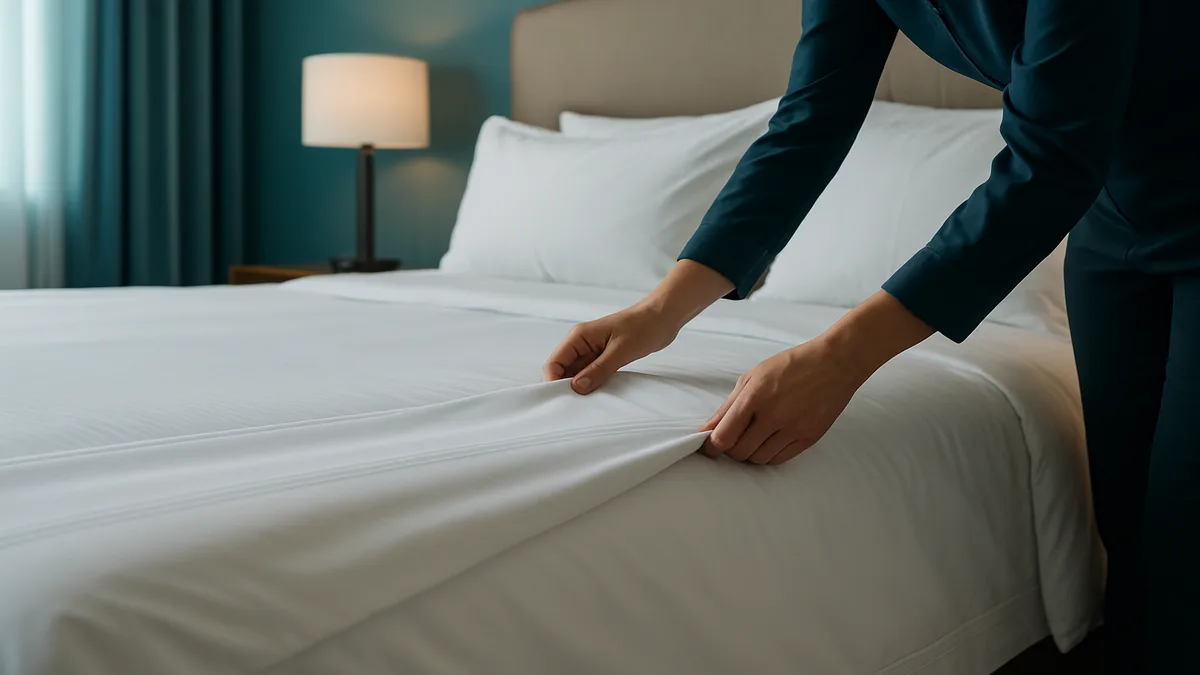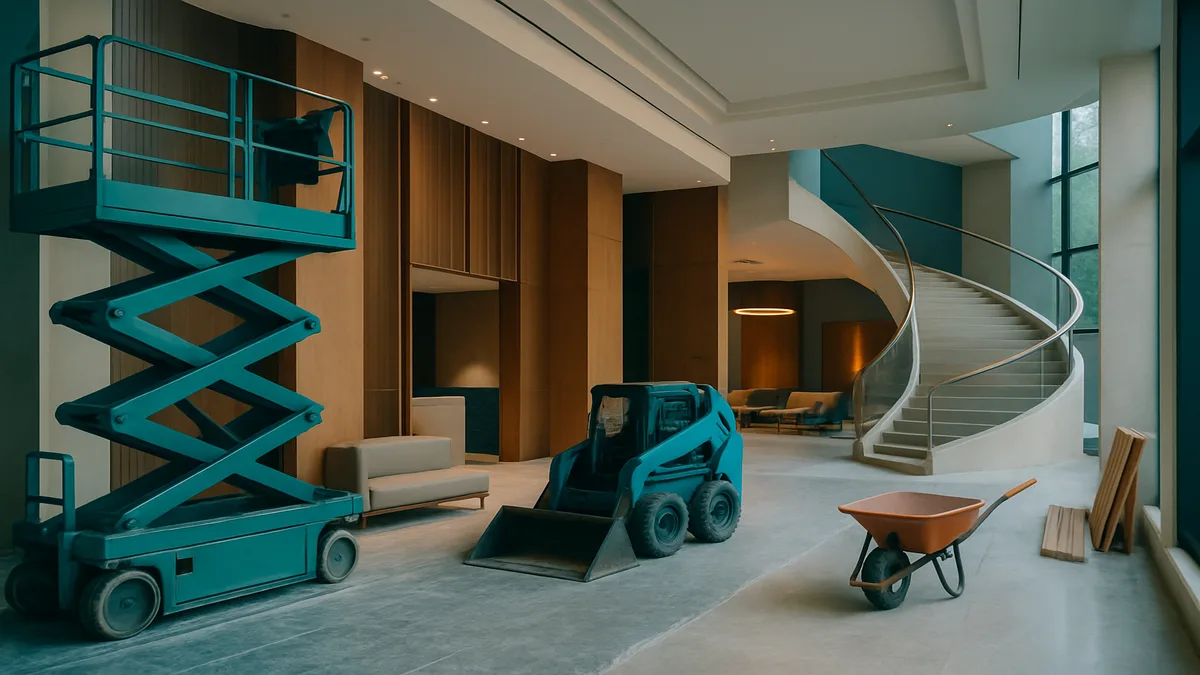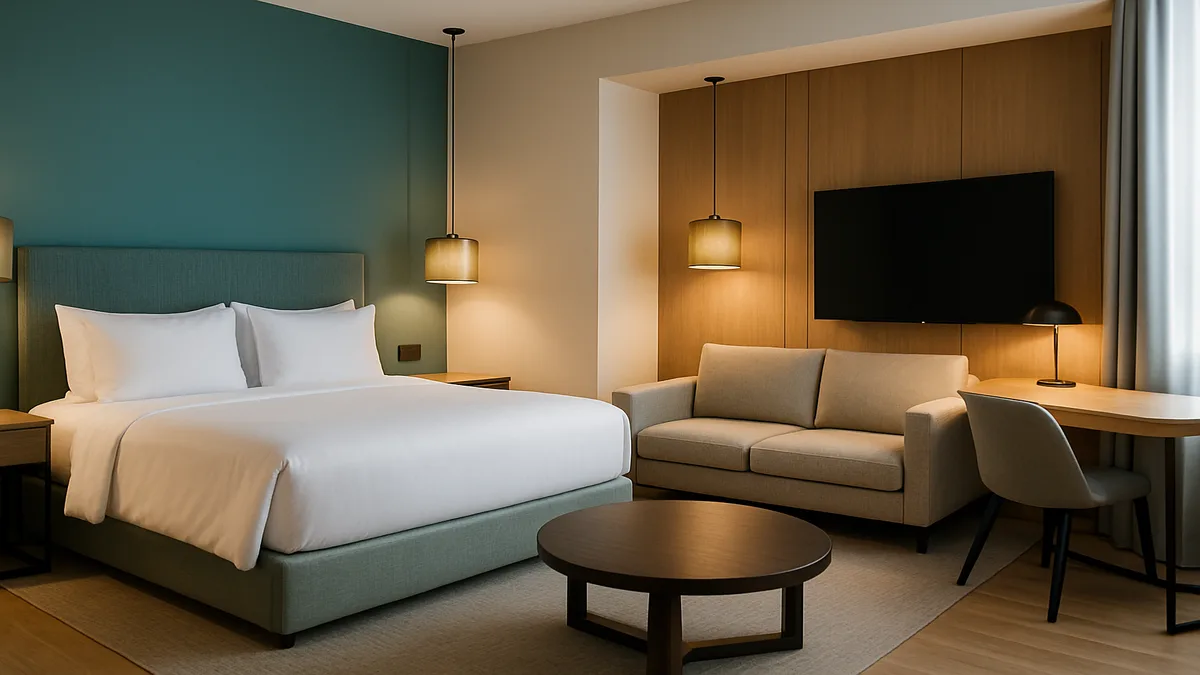
The hotel FF&E market was valued at an estimated $55-59 billion in 2023 and is projected to reach $107 billion by 2030, growing at a 6.9-7.3% CAGR. That growth is not hypothetical — it is being driven by a global hotel construction pipeline that hit an all-time record of 15,820 projects and 2.4 million rooms by late 2024, plus a $12-15 billion PIP renovation backlog that is forcing hotel owners to spend.
If you manufacture or distribute products that go inside a hotel room, lobby, restaurant, spa, or meeting space, you are in the FF&E business whether you use the term or not. Understanding the language, categories, budget structures, and procurement players of hotel FF&E is the foundation of selling effectively in this market. If you are new to the hospitality supply chain, start with our complete guide to becoming a hotel supplier for the full vendor-approval roadmap.
What FF&E Actually Means
FF&E stands for Furniture, Fixtures, and Equipment. In hotel accounting, FF&E is a capital expenditure category that includes all movable items that are not structurally part of the building. The distinction matters because FF&E is depreciated differently than the building itself and is budgeted separately from operating supplies.
FF&E vs. OS&E: Know the Difference
| Category | Definition | Examples | Accounting Treatment |
|---|---|---|---|
| FF&E (Furniture, Fixtures & Equipment) | Durable, movable items with a useful life of 1+ years | Beds, desks, chairs, lamps, TV mounts, artwork, drapery hardware | Capitalized and depreciated (typically 5-10 years) |
| OS&E (Operating Supplies & Equipment) | Consumable or short-lifecycle items used in daily operations | Linens, towels, glassware, cutlery, small kitchen equipment, hangers | Expensed as operating costs |
When a hotel buyer says “FF&E budget,” they mean the capital allocation for durable furnishings and equipment. When they say “OS&E budget,” they mean the operating allocation for consumables and replaceable items. Your product falls into one of these buckets, and the procurement process, buyer, and budget cycle are different for each. (For more on how those budget cycles work, see our guide to understanding hotel procurement.)
The Major FF&E Categories
Hotel FF&E encompasses far more than beds and desks. Here is a comprehensive breakdown of what falls under this umbrella, organized by subcategory.
Casegoods
Casegoods are the largest single category of hotel furniture — the hard-surface items that define a room’s structure and style. For a deep dive into sourcing, quality standards, and pricing for this category, see our hotel furniture wholesale sourcing and selling guide.
- Headboards and bed frames
- Nightstands / bedside tables
- Desks and work surfaces
- Dressers and storage units (increasingly rare in modern designs)
- TV consoles and media units
- Closet systems and wardrobes
- Minibar cabinets
- Luggage racks and benches
Casegoods are typically custom-manufactured to the brand’s design specification. Lead times run 16-24 weeks from order to delivery, and minimum quantities usually start at 50-100 rooms.
Seating
- Guest room chairs (desk chair, lounge chair)
- Lobby and lounge seating (sofas, sectionals, accent chairs)
- Restaurant and bar seating (dining chairs, banquettes, bar stools)
- Meeting and conference room seating
- Outdoor seating (pool, terrace, patio)
Seating is one of the most design-sensitive FF&E categories. Brands use seating to signal their market position — a luxury resort’s lobby chair communicates something fundamentally different than an economy hotel’s desk chair. Upholstery must meet Cal TB 117-2013 flammability standards and, for public spaces, often NFPA 260/261 as well.
Lighting
- Table lamps and desk lamps
- Floor lamps
- Wall sconces
- Pendant lights (lobby, restaurant, corridors)
- Chandeliers
- Bathroom vanity lighting
- Decorative and accent lighting
- Exterior and landscape lighting
Lighting is where engineering meets design. Hotels increasingly specify LED with color temperature controls, smart dimming, and integration with room management systems. Hilton’s Connected Room technology, for example, allows guests to control lighting through their phone — which means the lighting supplier needs to deliver products that are both aesthetically on-brand and technologically compatible.
Window Treatments
- Drapery (blackout and sheer panels)
- Drapery hardware (tracks, rods, tiebacks)
- Motorized shading systems
- Roller shades and Roman shades
- Shutters and blinds
Blackout performance is non-negotiable in hospitality. Guest complaints about light leakage are among the most common in hotel reviews. Window treatment suppliers who can guarantee 100% blackout while maintaining design aesthetics have a significant competitive advantage.
Artwork and Accessories
- Framed artwork
- Sculptural pieces
- Mirrors (decorative and functional)
- Decorative pillows and throws
- Vases and tabletop accessories
- Wall-mounted decorative elements
Artwork programs are typically managed by specialized hospitality art consultants who curate collections for the brand or property. For suppliers, this means your buyer is often the art consultant, not the hotel directly.
Bathroom Fixtures and Accessories
- Vanities and countertops
- Mirrors (backlit, magnifying)
- Towel bars and hooks
- Shower enclosures and doors
- Bathroom accessories (soap dishes, dispensers, tissue holders)
Note: Plumbing fixtures (toilets, faucets, showerheads) are often classified as building fixtures rather than FF&E, depending on the hotel’s accounting treatment. Always clarify with the buyer which budget your product comes from. For the consumable side of bathroom supply — toiletries, dispensers, and branded amenity programs — read our hotel bathroom amenities wholesale guide.
Technology and Equipment
- Televisions and mounting systems
- In-room safes
- Refrigerators and minibars
- Coffee makers
- Irons and ironing boards
- Hair dryers
- HVAC systems (PTACs, fan coils)
- Room control systems
- Digital signage
Technology is the fastest-growing FF&E subcategory. By 2024, 69% of a hotel’s tech budget was allocated to new software and systems, compared to just 23% in 2022. Smart room technology, mobile key systems, and IoT-enabled devices are moving from luxury differentiators to brand-standard requirements.
FF&E Budget Allocation: What Hotels Actually Spend
Per-Room FF&E Budgets
| Hotel Segment | FF&E Budget Per Room (New Construction) | FF&E Budget Per Room (Renovation) |
|---|---|---|
| Economy/Budget | $8,000 - $15,000 | $5,000 - $10,000 |
| Midscale | $15,000 - $25,000 | $8,000 - $18,000 |
| Upper Midscale | $20,000 - $35,000 | $12,000 - $22,000 |
| Upscale | $30,000 - $45,000 | $18,000 - $30,000 |
| Luxury | $45,000 - $100,000+ | $25,000 - $50,000+ |
These are 2022-2023 numbers, and they are higher than pre-pandemic baselines. PIP costs have increased 30%+ vs. pre-COVID levels, and vendor price hikes of 90-300% on specific products have pushed budgets upward across all segments.
How the Budget Breaks Down
For a typical midscale-to-upscale hotel renovation, the FF&E budget allocation looks roughly like this:
| Category | % of FF&E Budget | Per Room (at $25K total) |
|---|---|---|
| Casegoods | 30-35% | $7,500 - $8,750 |
| Soft goods (textiles, upholstery) | 15-20% | $3,750 - $5,000 |
| Lighting | 8-12% | $2,000 - $3,000 |
| Seating | 10-15% | $2,500 - $3,750 |
| Window treatments | 5-8% | $1,250 - $2,000 |
| Technology/equipment | 10-15% | $2,500 - $3,750 |
| Artwork and accessories | 5-8% | $1,250 - $2,000 |
| Bathroom fixtures/accessories | 5-8% | $1,250 - $2,000 |
These percentages shift significantly between new construction (where everything is specified from scratch) and renovation (where some categories may be refreshed while others are replaced entirely).
FF&E Procurement Timelines
New Construction: 12-18 Months
For a new hotel build, FF&E procurement begins well before the building is even finished. Here is the typical timeline:
- Months 1-3: Design development. Interior designer creates the design concept, specifies materials and finishes, and develops a preliminary FF&E budget.
- Months 3-6: Specification and sourcing. The design team (or an FF&E procurement agent) identifies specific products, solicits quotes, and develops a procurement package.
- Months 6-9: Bidding and selection. Procurement agent or hotel owner solicits bids from manufacturers, evaluates samples, and awards contracts.
- Months 9-14: Manufacturing. Custom FF&E is produced, inspected, and staged for delivery.
- Months 14-17: Shipping and installation. Products ship to the property, are received, inspected, and installed room by room.
- Month 18: Punch list and final inspection. Damaged or defective items replaced, installation quality verified.
Renovation: 6-12 Months
Renovations move faster because the design parameters are more constrained and quantities are known. But the timeline is still measured in months, not weeks:
- Months 1-2: Scope definition and design approval
- Months 2-4: Sourcing and bidding
- Months 4-8: Manufacturing and procurement
- Months 8-10: Phased installation (hotels typically renovate in waves, keeping some rooms operational)
- Months 10-12: Completion and quality review
Stop chasing hotels manually. InnLead.ai’s 12 AI agents scan renovation signals, identify procurement contacts, and book meetings with hotel buyers — automatically. Get Early Access
Key Players in Hotel FF&E Procurement
Who Selects the Products
The decision chain for FF&E involves multiple players, and the supplier who understands which player has influence at which stage wins more business.
Interior Design Firms For new construction and major renovations, the design firm is often the most influential party. They specify products by brand, model, finish, and material — and the procurement team buys what the designer specifies. Major hospitality design firms include:
- Toni Chi & Associates
- Wilson Associates
- Gettys Group
- Champalimaud Design
- HBA (Hirsch Bedner Associates)
- Rockwell Group
- Yabu Pushelberg
FF&E Procurement Agents / Purchasing Companies These companies manage the entire procurement process on behalf of the hotel owner — from specification through installation. They aggregate purchasing power across multiple projects and often negotiate supplier pricing. Key firms: -DERA
- Hospitality Purchasing Solutions
- Novella (formerly FF&E Warehouse)
- Paradigm Purchasing
Brand Procurement Teams Each major hotel chain has a corporate procurement organization that manages the AVL and negotiates master contracts. For brand-standard items (the products that define the brand experience), the brand procurement team has final say.
GPOs (Group Purchasing Organizations) Avendra and Entegra play a role in FF&E procurement, particularly for mid-range and economy brands where cost optimization is a priority. Avendra maintains over 2,000 vetted suppliers and provides up to 15% cost savings for member hotels.
How to Get Specified
Getting a designer or procurement agent to specify your product is the highest-value sales outcome in FF&E. It effectively removes you from price competition — the specification says your product, and alternatives must be equals or better.
To get specified:
- Build relationships with design firms before they start a project. Attend HD Expo (900+ exhibitors in 2022), BDNY (550+ exhibitors), and design industry events.
- Provide exceptional sample support. Designers evaluate products physically. Ship samples fast, include full specification data, and follow up.
- Create a hospitality-specific product library. Designers work from libraries and material boards. Make your products easy to specify by providing CAD files, Revit families, material swatches, and finish samples.
- Demonstrate durability. Hotel furniture gets used by thousands of guests per year. Independent lab testing (BIFMA, ASTM) for durability and performance is table stakes for serious specification.
FF&E Replacement Cycles: When Hotels Buy Again
Understanding replacement cycles is critical for forecasting demand and timing your outreach. Hotels do not replace FF&E based on a fixed calendar — they replace based on condition, brand mandate, and guest feedback. But there are predictable patterns.
Typical Replacement Cycles by Category
| FF&E Category | Typical Lifecycle | Replacement Trigger |
|---|---|---|
| Mattresses | 5-7 years | Guest complaint scores, sagging, staining |
| Casegoods | 7-10 years | PIP mandate, design refresh, damage accumulation |
| Upholstered seating | 5-8 years | Fabric wear, frame damage, staining |
| Carpet | 5-7 years | Wear patterns, staining, design refresh |
| Window treatments | 7-10 years | Fading, operational failure (motorized), design refresh |
| Lighting fixtures | 8-12 years | Design refresh, technology upgrade, energy efficiency |
| TVs and technology | 3-5 years | Technology obsolescence, guest expectations |
| Artwork | 10-15 years | Design refresh only; rarely replaced for condition |
| Bathroom accessories | 7-10 years | Corrosion, finish degradation, design refresh |
These cycles create a rolling wave of demand. A 200-room hotel that was fully renovated in 2017 is due for a mattress refresh around 2023 and a full FF&E renovation by 2025-2027. Multiply that by thousands of properties in a single chain, and you can see why the FF&E market sustains $55+ billion in annual revenue.
The PIP Renovation Cycle
Major hotel brands conduct quality assurance inspections every 2-3 years. When a property falls below standards, the brand issues a PIP specifying what must be upgraded and by when. The PIP cycle typically follows this pattern:
- Years 1-3: New or freshly renovated property. No action needed.
- Years 3-5: Minor updates may be required. Typically soft goods refreshes (bedding, drapery, carpet).
- Years 5-7: Moderate renovation. Seating, mattresses, and select casegoods replacement.
- Years 7-10: Major renovation. Full guest room FF&E replacement plus public area updates.
- Years 10+: Complete renovation approaching the scope of new construction.
The current $12-15 billion PIP backlog is largely composed of properties in the 5-10+ year window that deferred work during the pandemic. Our detailed analysis of the hotel renovation wave and PIP backlog breaks down how to identify properties in the PIP cycle and time your outreach. These renovations are now being enforced, creating a compressed demand spike that benefits every FF&E supplier who is positioned to deliver.
The FF&E Supply Chain: How Products Get to Hotels
The logistics of FF&E delivery are more complex than most B2B supply chains. Understanding the physical journey from factory to guest room helps you build the fulfillment infrastructure that hotels require.
The Typical FF&E Supply Chain
- Manufacturing — Custom production at factory (domestic or overseas)
- Quality inspection — Factory QC plus independent inspection for larger orders
- Consolidation — Products from multiple manufacturers consolidated at a warehouse or freight forwarder
- Shipping — Ocean freight (overseas) or trucking (domestic) to destination region
- Receiving warehouse — Products received, inspected, inventoried, and staged
- Property delivery — Truck delivery to hotel; products received at loading dock or service entrance
- Room-level distribution — Products moved to individual guest rooms via service elevators and corridors
- Installation — Furniture placed, equipment connected, fixtures mounted
- Punch list — Damaged or defective items flagged for replacement
For renovation projects, steps 6-9 happen in phases (typically 20-40 rooms at a time) while the hotel remains partially operational. This means your delivery schedule must align precisely with the contractor’s renovation sequence.
Domestic vs. Overseas Manufacturing
| Factor | Domestic Manufacturing | Overseas Manufacturing (Asia) |
|---|---|---|
| Lead time | 8-14 weeks | 16-28 weeks (including ocean freight) |
| Customization flexibility | High — smaller MOQs, faster iterations | Lower — requires larger runs to be cost-effective |
| Quality control | Easier to inspect and manage | Requires on-site QC or third-party inspection |
| Shipping cost per unit | Lower (trucking) | Higher (ocean + inland freight) |
| Unit cost | Higher (labor costs) | Lower (labor costs offset by freight) |
| Supply chain risk | Lower — no container/port exposure | Higher — vulnerable to shipping disruptions |
| Post-2022 demand trend | Increasing — nearshoring driving domestic preference | Stable but diversifying to Vietnam, India, Mexico |
The container shipping crisis of 2021-2022 shifted supplier sourcing preferences measurably toward domestic production. With 57% of companies reporting nearshoring as a key strategy by 2023, domestic FF&E manufacturers who can deliver competitive pricing have a structural advantage that did not exist five years ago.
Positioning Your Products for the FF&E Market
If You Are New to Hospitality
You have a product that works in residential, commercial, or institutional settings. Making it work in hotels requires specific adaptations:
- Durability testing. Residential-grade products fail in hotels. Get BIFMA X5.4 (lounge seating) or X5.1 (office seating) certification at minimum.
- Fire compliance. Cal TB 117-2013 for upholstery, NFPA 701 for drapery, 16 CFR 1633 for mattresses.
- Hospitality-grade finishes. Surfaces must resist luggage impact, cleaning chemicals, and daily housekeeping.
- Volume manufacturing. Hotels buy in quantities of 100-500+ per project. Can your production handle it?
- Custom capability. Brands specify exact finishes, dimensions, and materials. “Close enough” does not exist.
If You Are an Existing Hospitality Supplier
Your positioning challenge is differentiation in a market where products can look interchangeable. Consider:
- Total cost of ownership. Frame your pricing in terms of cost-per-room-per-year, factoring in durability, replacement cycles, and maintenance.
- Sustainability credentials. With sustainability certifications growing 20% between 2022 and 2023, eco-friendly products are moving from premium differentiator to baseline expectation. GREENGUARD Gold, FSC certification, and recycled content claims are increasingly part of the specification.
- Supply chain reliability. After the disruptions of 2020-2022 — when container costs hit 5-6x pre-pandemic levels — procurement directors value delivery certainty as much as product quality. If you manufacture domestically or have nearshore production, make it prominent.
- Technology integration. As hotels add smart room features, FF&E that integrates with room control systems (lighting with dimming protocols, furniture with integrated USB/wireless charging, motorized window treatments) commands premium pricing.
Your Next Steps
- Classify your product. Is it FF&E or OS&E? The answer determines your buyer, budget cycle, and procurement path. If you are unsure, read our guide to hotel procurement.
- Benchmark your per-room cost. How does your product’s cost compare to the budget allocation ranges above? If you are selling a $5,000 lighting package for a midscale hotel that budgets $2,000-$3,000 for lighting, you have a positioning problem.
- Get tested. BIFMA, ASTM, and fire safety certifications are non-negotiable for any serious FF&E supplier. Budget for independent lab testing before you start selling.
- Build design firm relationships. Attend HD Expo or BDNY. Get your products in front of specifiers. This is the highest-leverage sales activity in FF&E.
- Prepare for long timelines. FF&E procurement cycles run 6-18 months. Your sales pipeline, cash flow model, and production planning must account for this.
- Understand brand standards. Each hotel chain has specific product requirements. Read our guide to hotel brand standards compliance before approaching a chain.
The FF&E market is not just big — it is getting bigger, faster. The record construction pipeline and the renovation backlog are creating procurement demand that the current supplier base cannot fully satisfy. Explore how InnLead.ai connects FF&E suppliers with hotel buyers. For manufacturers and distributors who meet hospitality-grade standards and understand the industry’s unique buying process, the window of opportunity is wide open. Ready to start selling? Our supplier playbook for selling products to hotels covers every viable sales channel. And if you need help finding hotels that are actively sourcing, explore our services.
Use these related guides to keep moving through the same procurement, sales, or market research thread.
Skip the Manual Work
InnLead.ai's 12 AI agents find hotels buying your products, identify procurement contacts, and book meetings -- automatically.
Get Early Access