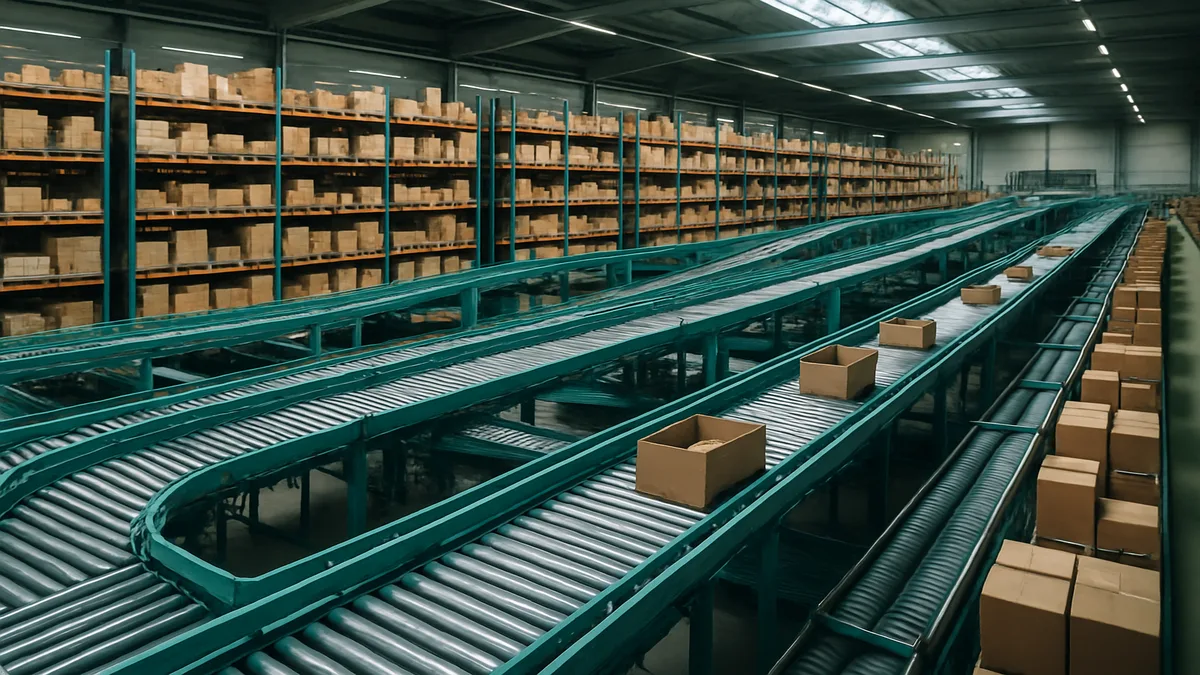
You manufactured a great product. You got on a hotel chain’s approved vendor list. Congratulations — you have cleared two of the three hurdles. The third one kills more hotel supply businesses than bad products or weak sales combined: distribution.
A hotel general manager does not care that your towels have the best absorbency rating in the category if they arrive two weeks late, short-shipped by 15%, with three cases damaged in transit. Hotels operate on razor-thin margins with zero tolerance for stockouts in guest-facing products. One missed delivery means borrowed product from the property down the street, a frantic call to a competitor supplier, and your name moved to the bottom of the reorder list.
The hotel supply chain moved $1.7 trillion in 2024. The global FF&E market alone hit $55-59 billion, with a renovation backlog estimated at $12-15 billion in outstanding PIPs. The U.S. hotel construction pipeline reached an all-time high of 6,378 projects. All of that product has to move from factory floor to hotel door — reliably, cost-effectively, and with quality intact.
This guide covers the distribution models, warehousing strategy, logistics cost structures, and relationship management required to build a distribution network that keeps hotel accounts satisfied and reordering.
Direct vs. Distributor: The Fundamental Decision
Every hotel supplier faces this choice first. The right answer depends on your product category, volume, geography, and capital position.
Model Comparison
| Factor | Direct Distribution | Distributor Model | Hybrid |
|---|---|---|---|
| Capital required | High ($500K-$5M+ for warehouse, fleet, systems) | Low (distributor absorbs logistics costs) | Moderate |
| Margin retention | Full wholesale margin (typically 35-55%) | Margin shared with distributor (you retain 20-40%) | Varies by channel |
| Control over delivery | Complete | Limited — distributor sets delivery schedules | Partial |
| Speed to market | Slow (12-18 months to build network) | Fast (leverage existing distributor network) | Moderate |
| Scalability | Limited by your infrastructure investment | High (distributor handles scaling) | Flexible |
| Relationship with hotel | Direct — you own the relationship | Indirect — distributor owns day-to-day contact | Split |
| Geographic reach | Limited to your warehouse radius | Broad (established distributors cover regions) | Expanding |
| Best for | High-value, high-margin products; custom/branded items | Commodity products; new market entry; capital-constrained suppliers | Established suppliers expanding geographically |
When to Go Direct
Direct distribution makes economic sense when:
- Your product is high-value (FF&E, specialty amenities, branded goods) where margins support logistics overhead.
- You serve a concentrated geographic market (e.g., 200+ hotel properties within a 300-mile radius of your warehouse).
- Your product requires specialized handling, installation, or setup that general distributors cannot provide.
- You need to control the unboxing experience — luxury amenity brands, for example, cannot afford product arriving in generic brown boxes with shipping damage.
When to Use Distributors
The distributor model works when:
- You are entering a new geographic market and lack local warehousing.
- Your product is a replenishment commodity (cleaning supplies, standard linens, paper goods) where price and availability matter more than brand experience.
- Your manufacturing is overseas and you need domestic distribution partners to handle customs, warehousing, and local delivery.
- Your capital is better deployed in product development and sales than logistics infrastructure.
The Hybrid Approach
Most successful mid-size hotel suppliers land on a hybrid model: direct distribution in their core market (where they have warehousing and delivery infrastructure) and distributor partnerships for secondary markets and new territories. This preserves margin where possible while enabling national or international reach.
Regional Warehousing Strategy
If you are going direct or hybrid, warehouse placement is the single biggest logistics decision you will make.
The Hotel Density Map
Hotel properties cluster in specific geographies. Your warehousing strategy should mirror that clustering.
Tier 1 U.S. Hotel Markets (highest property density):
- Dallas-Fort Worth (led all global markets for new hotel development in 2024)
- Atlanta (second-highest global pipeline)
- Orlando / Central Florida
- New York Metro
- Los Angeles / Southern California
- Nashville
- Houston
- Phoenix / Scottsdale
Tier 1 International Markets:
- Dubai / UAE (136 new hotels in pipeline)
- Riyadh / Saudi Arabia (349 projects, 94,000+ rooms — all-time high)
- London
- Bangkok / Thailand
- India (514 projects, 61,075 rooms)
Warehouse Positioning Framework
| Supplier Size | Recommended Warehousing | Coverage Target |
|---|---|---|
| Startup / Regional | 1 warehouse in primary market | 250-mile radius; cover 200-500 properties |
| Growing | 2-3 regional warehouses | Cover top 3 metro clusters; 1,000-2,500 properties |
| National | 4-6 strategically placed warehouses | Cover 80%+ of target properties within 2-day ground shipping |
| International | Regional hubs per continent + forward-staging in high-density markets | Global coverage; 3-5 day delivery to any property |
Warehouse Specification for Hotel Supplies
Hotel supply warehouses have specific requirements beyond standard distribution:
- Climate control: Required for amenities (temperature-sensitive formulations), linens (moisture causes mildew), and any perishable goods.
- Clean storage: Hotel products are guest-facing. Dust, pests, or warehouse contamination translates directly to property complaints and contract loss.
- Sample and display area: Hotels frequently request samples before reorder. Maintaining a showroom-ready sample area in your warehouse saves time and demonstrates professionalism.
- Staging area for quality inspection: Inbound product from manufacturing needs inspection before going to inventory. Outbound orders need quality verification before shipping. Allocate 10-15% of warehouse space to QC operations.
- Returns processing: Hotel returns are inevitable (wrong specification, damaged goods, overstock). Dedicated returns processing prevents contamination of primary inventory.
Stop chasing hotels manually. InnLead.ai’s 12 AI agents scan renovation signals, identify procurement contacts, and book meetings with hotel buyers — automatically. Get Early Access
Last-Mile Logistics: The Make-or-Break Delivery
Last-mile delivery to hotels is fundamentally different from e-commerce or retail distribution. Hotels have specific receiving requirements that suppliers must understand and accommodate.
Hotel Receiving Department Realities
- Limited receiving hours: Most hotels accept deliveries between 7:00 AM and 2:00 PM, Monday through Friday. Miss the window, and your driver sits idle or returns the load.
- Loading dock constraints: Many urban hotels lack loading docks. Downtown properties may require street-level delivery through the lobby or service entrance, with elevator transport to storage floors.
- Appointment scheduling: Large hotel chains require delivery appointments booked 24-48 hours in advance. Unscheduled deliveries are turned away.
- Split-shipment expectations: A single hotel order may need to be delivered to multiple locations within the property — housekeeping storage, kitchen, front office, maintenance shop. Your delivery team needs to understand the property layout.
- Proof of delivery requirements: Hotels require signed POD with item counts verified against the purchase order. Discrepancies must be noted at delivery, not discovered later.
Delivery Method Cost Comparison
| Delivery Method | Cost per Delivery (avg.) | Best For | Hotel Satisfaction |
|---|---|---|---|
| Own fleet (box truck) | $85-$150 per stop | High-value orders; dense metro routes; custom delivery requirements | Highest (branded trucks, trained drivers, flexible scheduling) |
| LTL carrier | $150-$400 per shipment | Multi-pallet orders; 200+ mile deliveries | Moderate (less flexible scheduling; no white-glove service) |
| Parcel carrier (UPS/FedEx) | $15-$75 per package | Small orders; emergency replenishments; sample shipments | Low for large orders; acceptable for small/urgent |
| Third-party delivery service | $50-$120 per stop | Overflow capacity; secondary markets without own fleet | Moderate (quality varies by provider) |
| Distributor delivery | Included in distributor margin | All order sizes; distributor-managed accounts | Moderate (you lose visibility) |
Fleet vs. Carrier Decision Framework
Run your own delivery fleet when:
- You have 10+ hotel deliveries per day in a metro area.
- Your average order exceeds $1,500 (the margin covers fleet cost).
- Hotels require specialized delivery (installation, white-glove, inside delivery to specific floors).
- Brand presentation matters (branded trucks, uniformed drivers).
Use third-party carriers when:
- Deliveries are fewer than 5 per day in a given area.
- Distance exceeds 200 miles from your warehouse.
- Order size is small enough that fleet cost per delivery exceeds carrier cost.
Inventory Management for Hotel Accounts
Hotel inventory management is different from retail in three critical ways: order predictability, stockout consequences, and seasonality patterns.
Demand Forecasting for Hotel Supplies
Hotel supply demand is more predictable than most industries — but only if you track the right signals.
Predictable demand drivers:
- Occupancy rates: Amenity and linen consumption correlates directly with occupancy. U.S. hotel occupancy averaged ~63% in 2023 (vs. 66% pre-pandemic). Track market-level occupancy data to forecast regional demand.
- Seasonal patterns: Leisure markets (Orlando, Las Vegas, resort destinations) spike in summer and holidays. Business markets (New York, Chicago, Dallas) spike Tuesday through Thursday year-round. Your safety stock should adjust quarterly by market.
- Renovation schedules: Hotels undergoing PIP renovations place bulk orders 3-6 months before room blocks go offline. Tracking renovation permits and brand announcements gives you advance demand signals.
- New property openings: A new 200-room Marriott Courtyard needs a full opening package — every SKU, full inventory depth. These orders are 10-20x larger than monthly replenishments. The global pipeline of 15,820 projects creates a steady stream of these high-value initial orders.
Safety Stock Formula for Hotel Suppliers
Conventional safety stock formulas undercount risk for hotel suppliers because stockout cost is not just lost revenue — it is lost accounts.
Recommended safety stock by product category:
| Category | Standard Safety Stock | Hotel Supply Safety Stock | Rationale |
|---|---|---|---|
| Guest amenities | 2 weeks | 4-6 weeks | Zero tolerance for stockouts in guest-facing products |
| Linens / towels | 3 weeks | 5-8 weeks | Long manufacturing lead time; import delays common |
| Cleaning supplies | 2 weeks | 3-4 weeks | Moderate substitutability; but brand-specific formulations are not interchangeable |
| FF&E items | Project-based | Build to order + 5% overage | Custom specifications; no stock product; plan for damage replacement |
| Paper goods | 2 weeks | 3-4 weeks | Bulky; warehouse space constraint is the limiting factor |
Inventory Turns Benchmarks
Aim for:
- Guest amenities: 8-12 turns per year (monthly replenishment cycle).
- Linens: 4-6 turns per year (quarterly replacement cycle plus emergency restocks).
- Cleaning supplies: 10-15 turns per year (high consumption, frequent reorder).
- FF&E: 1-2 turns per year (project-based; build-to-order dominant).
Quality Control at Delivery
Quality control does not end when product leaves your warehouse. In-transit damage and delivery errors are the most common sources of hotel complaints — and the fastest way to lose accounts.
Pre-Shipment QC Protocol
Before any order leaves your warehouse:
- Visual inspection: Check for packaging integrity, labeling accuracy, and product condition. For amenities, verify no leakage. For linens, verify correct fold, packaging, and color match.
- Count verification: Every order picked and counted against the PO. Hotels will count at receiving — discrepancies damage trust immediately.
- Documentation check: Packing list matches PO. Safety data sheets included for chemical products. Brand standard compliance documentation attached if required.
- Packaging adequacy: Hotel products must arrive in presentation-ready condition. Linens wrapped in protective poly. Amenities in cushioned packaging. FF&E items crated with adequate protection for the specific transportation mode.
In-Transit Quality Preservation
- Temperature-controlled transport: Required for amenities with temperature-sensitive formulations (anything containing natural oils, emulsions, or fragrance compounds). Summer delivery in southern states can exceed 140 degrees F inside an uncontrolled trailer.
- Moisture protection: Linens and paper goods absorb moisture. Plastic wrap, desiccant packets, and climate-controlled storage prevent damage.
- Stacking and load configuration: Heavy items (cleaning chemical cases) on bottom. Fragile items (glass amenity bottles, decorative accessories) on top with adequate cushioning. This sounds obvious — it is violated constantly by carriers unfamiliar with hotel supply handling requirements.
Delivery Quality Metrics to Track
| Metric | Target | Action Threshold |
|---|---|---|
| On-time delivery rate | 97%+ | Below 95%: root cause analysis required |
| Order accuracy (items and quantities) | 99%+ | Below 98%: warehouse process audit required |
| Damage rate | Below 1% | Above 2%: packaging and carrier review |
| POD completion rate | 100% | Any miss: driver retraining |
| Returns/claims rate | Below 2% of orders | Above 3%: product or process issue escalation |
Relationship Management with Hotel Receiving Departments
The receiving department is the frontline of your hotel relationship. Their experience with your deliveries directly influences reorder decisions — often more than the procurement manager’s evaluation of your products.
Building Receiving Department Loyalty
- Consistent delivery timing: Hotels schedule labor around delivery appointments. Chronic late arrivals force the receiving team to wait or reschedule other tasks. Hit your appointment windows consistently and you earn goodwill that competitors cannot buy.
- Professional delivery crews: Your driver is your brand ambassador at the property. Uniformed, courteous, knowledgeable about the products they are delivering. They should know to use the service entrance, not track through the lobby, and leave the receiving area clean.
- Proactive communication: If a delivery will be late, short-shipped, or rescheduled, communicate before the receiving team is standing at the dock waiting. A 24-hour advance notice of a problem is manageable; a no-show is a relationship-damaging event.
- Problem resolution speed: When issues arise — and they will — your response time matters more than the issue itself. A damaged case resolved with a replacement shipment within 24 hours builds trust. A damaged case that takes two weeks and three emails to resolve builds resentment.
The Receiving Department Report Card
Smart suppliers conduct quarterly “delivery satisfaction” check-ins with receiving departments at their top accounts. Ask:
- Are deliveries arriving within the appointment window?
- Is product quality consistent upon arrival?
- Are counts accurate?
- Is the delivery crew professional and efficient?
- What would make your job easier when receiving our products?
This data feeds directly into your continuous improvement process and signals to the hotel that you are invested in the operational relationship, not just the purchasing relationship.
Logistics Cost Structure: What the Numbers Look Like
Transparency on logistics costs helps suppliers make informed distribution model decisions.
Total Logistics Cost as Percentage of Revenue
| Supplier Type | Logistics as % of Revenue | Breakdown |
|---|---|---|
| Direct (own warehouse + fleet) | 12-18% | Warehousing 4-6%, Transportation 5-8%, Handling/QC 2-3%, Technology 1% |
| Distributor model | 8-12% (absorbed in distributor margin) | You pay through lower wholesale pricing to the distributor |
| Hybrid | 10-15% | Own logistics in primary market; distributor costs in secondary markets |
| Import + domestic distribution | 15-22% | Ocean freight 3-5%, Customs/duties 2-4%, Domestic distribution 10-13% |
Cost Reduction Levers
- Route optimization: Consolidate hotel deliveries into geographic clusters. A 12-stop route in a metro area costs 40-60% less per stop than 12 individual deliveries.
- Order minimums: Set minimum order values ($500-$1,500 for free delivery; surcharge below) to avoid unprofitable small deliveries.
- Delivery frequency consolidation: Move hotels from weekly to biweekly delivery where inventory levels support it. Fewer stops = lower fleet costs.
- Backhaul utilization: If your trucks deliver to hotels in the morning, use return trips for supplier pickups, sample retrievals, or returns processing.
- Nearshoring manufacturing: With 57% of companies reporting nearshoring as key to supply chain strategy in 2023, moving production closer to your distribution network reduces transit times and transportation costs. Mexico saw a 17% increase in U.S. buyer audit demand in Q3 2023, signaling this trend in action.
Building for Scale: Technology Infrastructure
Distribution networks that rely on phone calls, spreadsheets, and memory do not scale past 50 hotel accounts. Invest in systems early.
Minimum Viable Technology Stack
- Warehouse Management System (WMS): Inventory tracking, pick/pack/ship workflows, location management. Minimum investment: $500-$2,000/month for cloud-based WMS.
- Order Management System (OMS): Integrated with hotel procurement platforms (Avendra, Birch Street, Fourth). EDI capability is increasingly required by major chains.
- Transportation Management System (TMS): Route optimization, carrier management, delivery scheduling, POD capture. Critical once you exceed 20 deliveries per day.
- Customer Portal: Allow hotel purchasing managers to check order status, inventory availability, and delivery schedules online. Reduces inbound calls by 40-60%.
Integration Requirements
Major hotel chains and GPOs increasingly require electronic integration:
- EDI (Electronic Data Interchange): Purchase orders, invoices, advance ship notices transmitted electronically. Avendra, Birch Street, and Fourth all support EDI.
- Punch-out catalogs: Your product catalog accessible within the hotel’s procurement platform. Hotels order without leaving their system.
- API connectivity: Real-time inventory and delivery status feeds.
Suppliers who cannot integrate electronically are at a growing disadvantage as hotel procurement digitizes. E-procurement sales surpassed $1 trillion in 2022, and adoption is accelerating — 69% of hotel tech budgets went to new software in 2024, up from 23% in 2022.
The Distribution Competitive Advantage
Distribution is not glamorous. It does not win design awards or generate social media buzz. But it is the operational backbone that determines whether your hotel supply business scales to $10 million or stalls at $2 million.
The suppliers who win in hotel distribution are the ones who obsess over on-time delivery rates, invest in warehouse quality control, build genuine relationships with receiving departments, and continuously optimize their logistics cost structure.
Product gets you in the door. Distribution keeps you there. Build your trade show strategy around face-to-face buyer access at events like HD Expo, BDNY, and The Hotel Show Dubai, and supplement it with automated prospecting from InnLead.ai to maintain year-round pipeline coverage.
Use these related guides to keep moving through the same procurement, sales, or market research thread.
Skip the Manual Work
InnLead.ai's 12 AI agents find hotels buying your products, identify procurement contacts, and book meetings -- automatically.
Get Early Access