HITEC 2023 landed at the Metro Toronto Convention Centre from June 26-29 — the first international HITEC in years, and it sold out. Over 325 hospitality technology companies exhibited, and the energy on the show floor reflected an industry that has moved decisively past pandemic-era caution into aggressive technology investment.
For hotel product suppliers, HITEC is not your typical trade show. This is not where hotels browse amenity samples or evaluate linen thread counts. HITEC is where the hospitality industry’s technology infrastructure is built — procurement platforms, property management systems, inventory management tools, and the digital workflows that determine how hotels discover, evaluate, and purchase products from suppliers like you.
If you sell to hotels, what happens at HITEC this year determines how hotels buy from you next year. Here are the takeaways that matter most for the supply side.
The Big Story: Operational Technology Takes Center Stage
While HITEC 2024 in Charlotte would later be defined by the AI-everywhere narrative (“Tech and The Human Touch”), Toronto’s 2023 edition focused squarely on operational efficiency and technology-driven recovery. The hotel industry was still digesting the aftermath of the pandemic-era labor crisis — 79% of hoteliers reported staff shortages in 2024, with housekeeping as the number one critical need — and the technology conversations at HITEC 2023 reflected that urgency.
What This Means for Suppliers
The operational technology investments hotels made coming out of HITEC 2023 fundamentally reshape the supplier-hotel interface:
-
Procurement is going digital, fast. E-procurement sales surpassed $1 trillion between 2021 and 2022, growing 18% year-over-year. Hotels at HITEC 2023 were actively evaluating procurement platforms that digitize the entire purchase-to-pay cycle. Suppliers who cannot integrate with platforms like Avendra, Birch Street Systems, and Fourth are being filtered out of consideration.
-
Property management systems are centralizing purchasing data. Cloud-based PMS platforms now aggregate purchasing across property portfolios, giving hotel management companies visibility into supplier performance, pricing consistency, and delivery reliability across dozens or hundreds of properties simultaneously. Your pricing and service quality are now benchmarked across every property you serve — in real time.
-
Automation is replacing manual processes. Hotels that cannot hire enough staff are automating everything they can. For procurement, this means auto-replenishment systems, predictive ordering based on occupancy forecasts, and automated vendor evaluation scoring. If your sales process relies on a personal relationship with a purchasing manager who places orders by phone, that process is being automated out of existence.
Procurement Technology: The Sessions That Mattered
Digital Procurement Maturity
Several HITEC 2023 sessions explored the procurement technology stack that hotels are building. The common theme: hotels are moving from “we have a procurement system” to “our procurement system drives strategic sourcing decisions.”
Key capabilities hotels are now demanding from procurement platforms:
- Centralized vendor management across multi-property portfolios
- Real-time inventory tracking integrated with PMS occupancy data
- Automated purchase order workflows triggered by par-level thresholds
- Spend analytics and reporting with drill-down by property, category, and vendor
- Contract lifecycle management with automated renewal alerts
- Supplier performance scorecards with delivery, quality, and pricing metrics
For suppliers, the actionable insight is this: your ability to integrate electronically with these platforms — via EDI, punch-out catalogs, or API connections — is becoming a qualification criterion, not a nice-to-have. In 2022, 23% of a typical hotel’s tech budget went to new software. The trajectory is clear, and procurement software is a primary investment target.
Cloud Migration and Data Centralization
The cloud migration discussion at HITEC 2023 had direct procurement implications. As hotels move property management, revenue management, and operational systems to cloud infrastructure, they gain the ability to centralize data that was previously siloed at individual properties.
For suppliers, this centralization means:
- Volume aggregation visibility. Hotel management companies can now see total spend across their portfolio with each supplier, enabling stronger volume-based negotiation.
- Performance comparison. Your delivery performance at one property is visible to procurement managers at every property in the portfolio.
- Standardization pressure. Cloud-based systems make it easier for hotel companies to standardize suppliers across properties, which can benefit approved vendors (more volume) or disadvantage regional suppliers (replaced by national contracts).
Sustainability on the Exhibition Floor
Sustainability was not the headline theme at HITEC 2023 the way it would become at later events, but it was a persistent undercurrent across the exhibition floor and breakout sessions. For context on the broader $50 billion sustainable hotel supply opportunity, see our comprehensive market analysis. The context: sustainability certifications in the hotel sector grew 20% between 2022 and 2023, and hotels arriving at HITEC were increasingly asking technology vendors how their platforms could track and report sustainability metrics.
Supplier-Relevant Sustainability Tech
Several exhibitors showcased capabilities relevant to the supply chain:
- Carbon footprint tracking per procurement category. Hotels are beginning to measure Scope 3 emissions from their supply chain. Marriott’s net-zero 2050 target (SBTi verified) and its 2030 goal of reducing Scope 3 GHG by 27.5% mean your product’s carbon footprint will increasingly appear in procurement evaluations.
- Waste tracking and diversion reporting. With Marriott targeting 45% waste-to-landfill reduction by 2025 and Hilton targeting 50% by 2030, procurement platforms are adding waste analytics that tie packaging waste back to specific suppliers and product categories.
- Sustainable sourcing verification. Blockchain-based and certificate-tracking tools for verifying sustainability claims in the supply chain were present on the exhibition floor — still early-stage, but directionally significant.
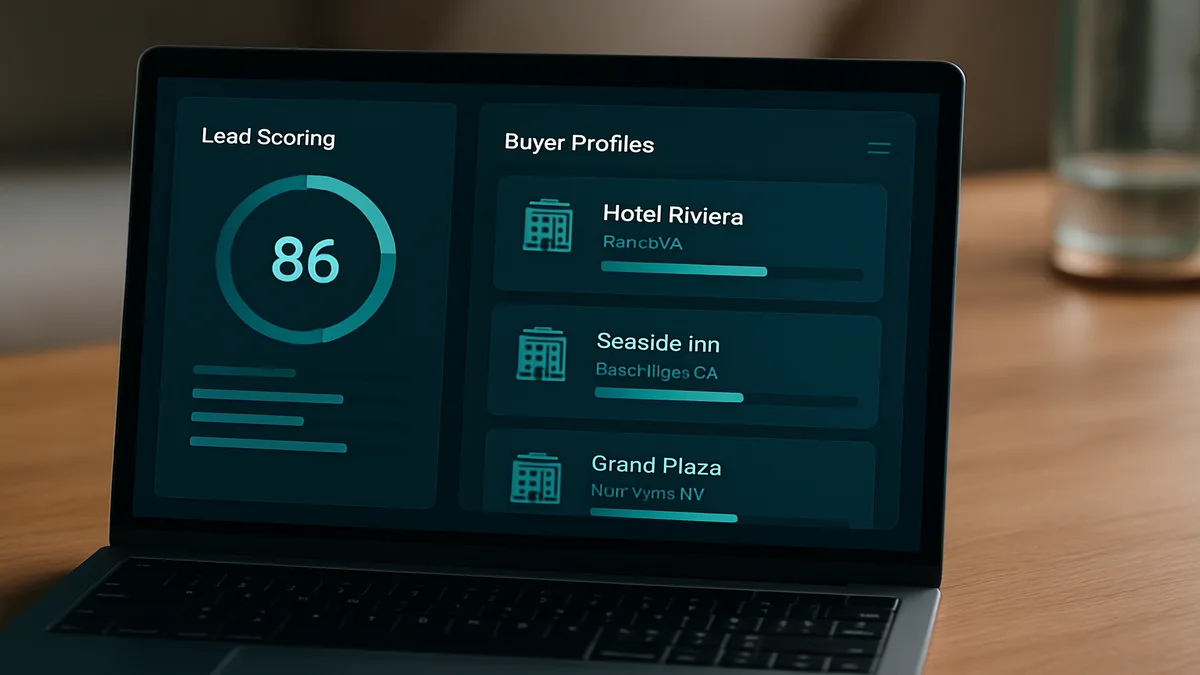
Stop chasing hotels manually. InnLead.ai’s 12 AI agents scan renovation signals, identify procurement contacts, and book meetings with hotel buyers — automatically. Get Early Access
Labor Shortage Solutions: Indirect Supplier Impact
The labor shortage dominated multiple HITEC 2023 sessions, and while the immediate focus was on hotel operations (robots, kiosks, AI chatbots for guest service), the ripple effects on procurement are significant.
How Labor Shortages Change Procurement Behavior
- Fewer procurement specialists. Hotels with lean teams consolidate vendor relationships to reduce management overhead. Instead of managing 15 amenity suppliers, they consolidate to 2-3. Larger suppliers with broader product lines benefit; niche single-category suppliers face consolidation risk.
- Preference for full-service suppliers. Hotels want suppliers who handle more of the value chain — not just product delivery, but inventory management, auto-replenishment, merchandising, and quality monitoring. If your competitor offers managed inventory programs and you offer products-on-a-truck, you are at a disadvantage.
- Automation of reordering. Understaffed hotels cannot have purchasing managers manually tracking par levels and placing orders. Auto-replenishment systems — where inventory monitoring triggers automatic POs — were a recurring topic. Suppliers who integrate with these systems get locked into the reorder flow; suppliers who require manual ordering gradually fall off.
The statistic that echoed through the halls: 87% of hotel businesses report that new technology was crucial to their operations. When hotels invest in technology, the technology shapes how they interact with every vendor in their ecosystem.
Networking Intelligence: What Suppliers Should Have Done at HITEC 2023
HITEC’s value for hotel product suppliers is not primarily the exhibition floor — it is the networking. The concentrated presence of hotel technology decision-makers, operations executives, and procurement leaders creates a density of relevant contacts that no other single event matches.
High-Value Contacts at HITEC
| Contact Type | Why They Matter | How to Find Them |
|---|---|---|
| Hotel CTO / VP of Technology | Drives procurement platform selection; influences which suppliers can integrate | HITEC keynotes and panel sessions; CIO roundtables |
| GPO Category Managers | Avendra, Birch Street representatives attend HITEC for technology evaluation | Exhibitor booths (procurement platform companies); evening receptions |
| Management Company COOs | Operational leaders who influence supplier consolidation decisions | Executive networking events; HFTP-hosted dinners |
| Procurement Platform Vendors | Your future digital sales channel; they determine how hotels discover suppliers | Exhibition floor (Birch Street, Fourth, FutureLog booths) |
The Networking Mistake Most Suppliers Make
Suppliers at HITEC tend to gravitate toward hotel GMs and directors of operations — the people who use their products. The higher-leverage contacts are the technology and procurement leaders who are building the systems that will determine vendor discovery and evaluation for the next decade. A 15-minute conversation with a GPO category manager at an evening reception is worth more than 50 cold calls to individual properties.
Key Announcements and Trends to Watch
Procurement Platform Consolidation
Several procurement technology providers at HITEC 2023 announced expanded capabilities — moving from point solutions (just purchasing, or just inventory) to integrated suites covering the full procure-to-pay lifecycle. This consolidation means fewer platforms for suppliers to integrate with, but deeper integration requirements with each.
Mobile-First Procurement
Multiple exhibitors demonstrated mobile procurement interfaces — allowing hotel purchasing managers to approve POs, check inventory, and review supplier catalogs from their phones. The implication: your product catalog, pricing, and availability need to be current in digital formats that render correctly on mobile devices. Static PDF catalogs sent by email are increasingly inadequate.
Data-Driven Vendor Evaluation
The emerging trend with the most significant long-term supplier impact: data-driven vendor scoring. Procurement platforms are aggregating delivery performance, quality incident rates, pricing competitiveness, and sustainability metrics into automated vendor scorecards. Hotels are beginning to make sourcing decisions based on these composite scores rather than relationship-based evaluation.
For suppliers, this means every delivery, every quality incident, and every pricing inconsistency is being recorded and will influence future purchasing decisions at scale.
What HITEC 2023 Means for Your 2024 Strategy
The Toronto show crystallized several strategic imperatives for hotel product suppliers:
-
Invest in electronic integration. EDI, punch-out catalogs, API connections to major procurement platforms. This is table stakes within 12-18 months.
-
Build sustainability documentation. Carbon footprint data, third-party certifications, and packaging lifecycle analysis are becoming procurement evaluation criteria, not marketing materials.
-
Prepare for vendor consolidation. Hotels are reducing supplier counts. If you are a single-category supplier, consider expanding your product line or forming partnerships that present a broader offering.
-
Digitize your catalog. Product specifications, pricing, availability, and sustainability data must be available in digital formats compatible with hotel procurement platforms. Invest in rich product data.
-
Track procurement technology adoption. The platforms hotels choose at HITEC define the purchasing infrastructure for years. Know which platforms your target hotel accounts are implementing, and ensure you can integrate.
HITEC 2024 moves to Charlotte, North Carolina, June 24-27, where the conversation will accelerate further into AI-driven procurement and “digital workers” for hospitality. For confirmed dates and ROI strategies for all major shows, see our 2026 hotel trade show calendar. The direction set in Toronto is clear: hospitality procurement is digitizing at an accelerating pace, and suppliers who adapt their systems, data, and processes to meet hotels in the digital procurement environment will capture a disproportionate share of the $55-59 billion hotel FF&E market and the $24.3 billion amenities market.
The suppliers who were in Toronto heard the signal. The question is who acts on it first. To build a reliable distribution network that supports the digital procurement shift, and to understand the $12-15 billion renovation pipeline driving procurement activity, explore our operational guides. Contact InnLead.ai to automate your prospecting between trade show events.
Use these related guides to keep moving through the same procurement, sales, or market research thread.
Skip the Manual Work
InnLead.ai's 12 AI agents find hotels buying your products, identify procurement contacts, and book meetings -- automatically.
Get Early Access