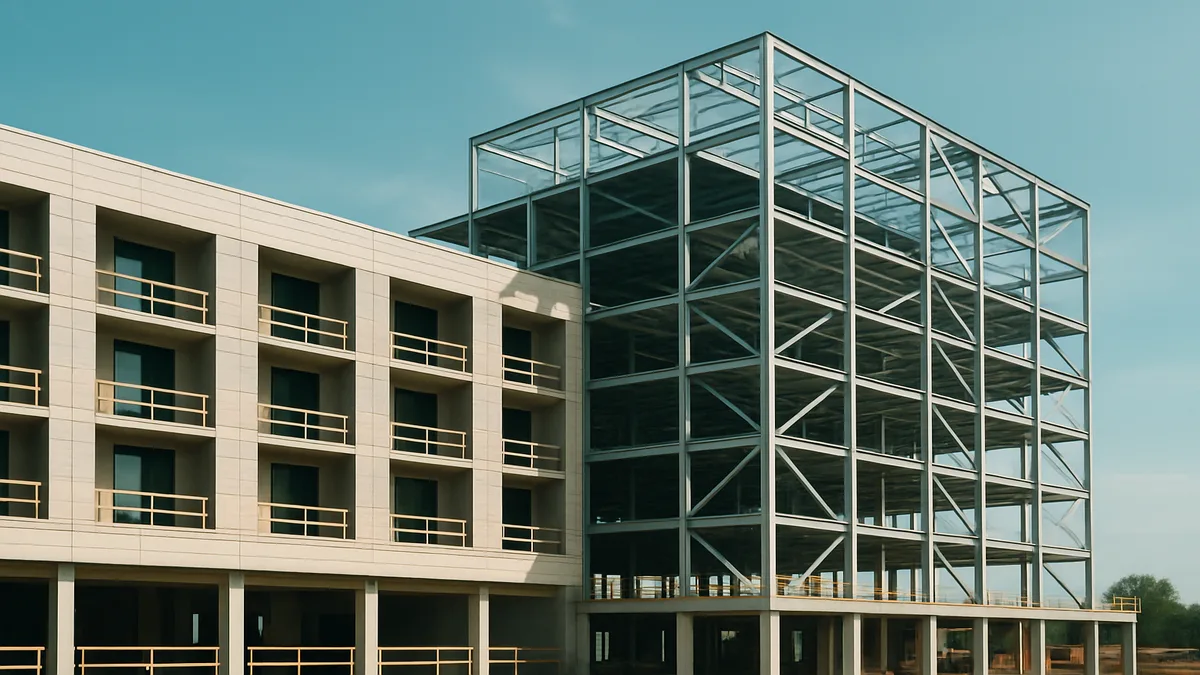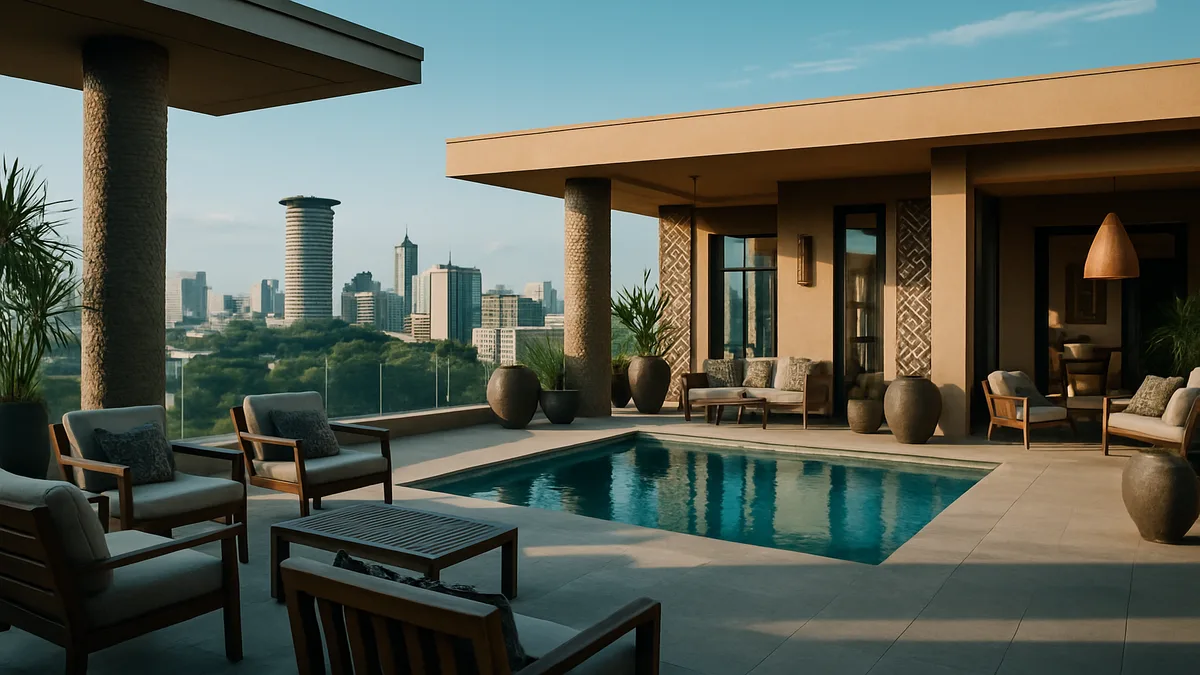
While the global hotel supply industry focuses on record-breaking pipelines in the United States, Middle East, and Asia-Pacific, Africa is quietly assembling one of the most significant hotel development booms on the planet. With over 78,000 rooms in the active development pipeline across the continent — and international hotel chains racing to plant flags in key markets — Africa represents the next major frontier for hotel suppliers.
This is not speculative. Marriott, Hilton, IHG, Accor, and Radisson are all aggressively expanding across Africa. The global hotel construction pipeline hit an all-time high of 15,820 projects and 2,438,189 rooms at Q4 2024, and Africa’s share of that pipeline is growing faster than any other region in percentage terms.
For hotel suppliers — whether you manufacture FF&E, amenities, linens, technology, or food service products — Africa presents both massive opportunity and distinct operational challenges. This guide covers the five key markets, their development trajectories, and the practical realities of selling into each one.
The African Hotel Pipeline: Key Numbers
Before diving into individual markets, here is the continental overview:
| Metric | Figure | Context |
|---|---|---|
| Total rooms in pipeline | 78,000+ | Across all stages: planning, final planning, under construction |
| Active projects | 550+ | Hotel developments in various stages |
| Leading international brands | Marriott, Hilton, Accor, Radisson, IHG | All have stated Africa expansion strategies |
| Year-over-year pipeline growth | 12-18% | Consistently outpacing mature markets |
| Average project size | 140-160 rooms | Smaller than Middle East average, larger than European average |
| Estimated FF&E spend per room (mid-market) | $8,000-$18,000 | Varies significantly by market and segment |
| Projected pipeline FF&E value | $800M-$1.4B+ | Based on room count and segment mix |
The pipeline concentration is not evenly distributed. Five markets account for the vast majority of development activity, each with distinct buyer profiles, procurement practices, and market entry requirements.
Market 1: Kenya — Nairobi as the East African Hub
Development Landscape
Nairobi is the commercial capital of East Africa and the primary hotel development hub for the region. The city serves as headquarters for the United Nations Environment Programme (UNEP) and the United Nations Office at Nairobi, driving sustained demand for business-class and upscale accommodations.
Pipeline highlights:
- 30+ branded hotel projects in various stages across Kenya
- Nairobi accounts for approximately 60% of Kenya’s hotel pipeline
- Key corridor: Nairobi’s Upper Hill and Westlands districts
- Secondary markets: Mombasa (beach tourism), Naivasha (conference tourism), Diani
Major branded developments:
- Hilton has multiple properties under development, including conversions
- Marriott expanded Protea Hotels (its Africa-focused brand) aggressively
- Radisson Hotel Group has the largest branded footprint in East Africa
- IHG entered with Holiday Inn and InterContinental properties
Market segment: Primarily upper-midscale to upscale. Business travel drives Nairobi demand, while safari and beach tourism support properties outside the capital.
Supplier Entry Points
| Factor | Detail |
|---|---|
| Procurement approach | Mix of international procurement (for branded chains) and local sourcing (for independents) |
| Import duties | 25% import duty on finished furniture; lower rates on raw materials |
| Local sourcing preference | Strong government push for local content; suppliers with local manufacturing or assembly gain advantage |
| Payment terms | 60-90 day terms standard; letters of credit common for first orders |
| Key trade body | Kenya Association of Hotel Keepers and Caterers (KAHC) |
| Currency | Kenyan Shilling (KES); USD widely accepted for international transactions |
Strategy for suppliers: Partner with a Nairobi-based distributor or establish a local assembly operation. The combination of import duties and local content preferences means suppliers who ship finished goods from overseas face price disadvantages compared to those who import components and assemble locally.
Market 2: Nigeria — Lagos Business Travel Boom
Development Landscape
Lagos is Africa’s largest city by population and its commercial powerhouse. Nigeria’s hotel market is driven overwhelmingly by business travel, with Lagos accounting for the majority of demand. The city’s chronic shortage of quality hotel rooms relative to business traveler demand creates strong investment fundamentals.
Pipeline highlights:
- 25+ branded hotel projects across Nigeria
- Lagos represents approximately 70% of Nigeria’s hotel development
- Abuja (the capital) is the secondary market, driven by government and diplomatic demand
- Port Harcourt serves the oil and gas sector
Major branded developments:
- Marriott operates and develops through its Africa-focused brands
- Hilton has expanded through both new builds and conversions
- Radisson has the deepest portfolio in West Africa
- Best Western and IHG have growing presence
Market segment: Midscale to upper-upscale, heavily weighted toward business and corporate travel. The luxury segment is small but growing, driven by high-net-worth Nigerian travelers and international executives.
Supplier Entry Points
| Factor | Detail |
|---|---|
| Procurement approach | International chains use centralized procurement; independents source through Lagos-based agents |
| Import complexity | Multiple ports with variable clearance times; Lagos port (Apapa/Tin Can Island) is primary but congested |
| Customs challenges | Import documentation requirements are extensive; work with experienced customs brokers |
| Payment terms | 30-60 days for established relationships; pro-forma payment or LC for new suppliers |
| Currency risk | Nigerian Naira (NGN) has experienced significant volatility; price in USD when possible |
| Key trade body | Federation of Tourism Associations of Nigeria (FTAN) |
Strategy for suppliers: The Nigerian market rewards patience and relationships. Engage a credible local agent with hotel industry connections in Lagos. Plan for longer customs clearance timelines than other African markets. Price in USD to protect against Naira volatility. Start with one or two branded hotel projects to establish local references before pursuing independents.
Market 3: South Africa — Cape Town Tourism and Johannesburg Business
Development Landscape
South Africa has the most mature hotel market on the continent, with established supply chains, sophisticated procurement practices, and a diverse tourism base. Cape Town is the tourism anchor (leisure, conferences, wine country), while Johannesburg drives business travel.
Pipeline highlights:
- 40+ hotel projects in various stages across South Africa
- Cape Town and Johannesburg account for the majority of development
- Conversion activity is significant, with older properties being rebranded and renovated
- The Radisson, Marriott (Protea), and Hilton brands dominate
Market characteristics:
- South Africa has a well-established local manufacturing base for hotel supplies
- The hospitality design community is sophisticated, with strong ties to European and Middle Eastern design firms
- Sustainability is increasingly a differentiator, driven by water scarcity concerns and eco-tourism branding
- The Rand (ZAR) fluctuates but is more stable than most African currencies
Supplier Entry Points
| Factor | Detail |
|---|---|
| Procurement approach | Most sophisticated on the continent; RFQ processes, vendor qualification, and competitive bidding are standard |
| Local manufacturing | Strong domestic FF&E, linen, and amenity manufacturing; local suppliers are competitive |
| Import duties | Varies by product category (10-30%); preferential access under AGOA for US-origin goods |
| Payment terms | 30-60 days standard; bank guarantees may be requested for large orders |
| Key trade bodies | Tourism Business Council of South Africa (TBCSA), FEDHASA (hotel association) |
| Currency | South African Rand (ZAR) |
Strategy for suppliers: South Africa is the most accessible African market for international suppliers, but also the most competitive. Local manufacturers are well-established and price-competitive. International suppliers differentiate through specialized products (smart room technology, premium amenities, sustainable innovations) rather than commodity categories. Consider Cape Town as your initial market — the tourism-driven hotel sector values premium, design-forward products.
Stop chasing hotels manually. InnLead.ai’s 12 AI agents scan renovation signals, identify procurement contacts, and book meetings with hotel buyers — automatically. Get Early Access
Market 4: Morocco — Marrakech Luxury and Tangier Development
Development Landscape
Morocco has positioned itself as North Africa’s premier tourism destination, with deliberate government investment in hotel infrastructure. The Vision 2030 tourism strategy targets 17.5 million visitors (up from approximately 14 million in 2023) and substantial hotel capacity expansion.
Pipeline highlights:
- 20+ branded hotel projects, concentrated in Marrakech and Tangier
- Marrakech is the luxury epicenter, attracting Aman, Four Seasons, and Mandarin Oriental
- Tangier is the emerging development corridor, with a new port and free trade zone driving investment
- Casablanca serves the business travel segment
- Essaouira and Fez are growing boutique and heritage tourism markets
Market characteristics:
- Strong design culture blending traditional Moroccan craft with contemporary luxury
- Government incentives for hotel development (tax breaks, land grants in designated tourism zones)
- French is the primary business language alongside Arabic
- Proximity to Europe makes it a natural extension for European hotel suppliers
Supplier Entry Points
| Factor | Detail |
|---|---|
| Procurement approach | Luxury properties source internationally; midscale properties prefer regional suppliers |
| Design influence | Strong demand for artisan and craft-inspired products; Moroccan design is a selling point globally |
| Import logistics | Casablanca and Tangier ports are efficient by African standards; customs processes are digitizing |
| Payment terms | 60-90 days; letters of credit preferred for first transactions |
| Free trade zones | Tangier Med zone offers duty-free import/export for assembly and re-export |
| Currency | Moroccan Dirham (MAD); pegged to a Euro/USD basket, relatively stable |
Strategy for suppliers: Morocco’s luxury hotel market values design excellence and craftsmanship. Suppliers of high-end bathroom fixtures, artisan textiles, premium amenities, and bespoke FF&E have the strongest entry point. The Tangier Med free trade zone offers an interesting logistics play — import components duty-free, assemble, and distribute to Moroccan hotels and potentially re-export to West African markets.
Market 5: Egypt — Red Sea Resorts and Cairo Business
Development Landscape
Egypt’s hotel market is bifurcated: Red Sea resort properties (Hurghada, Sharm el-Sheikh, Marsa Alam) serving European leisure tourism, and Cairo business hotels serving corporate and cultural tourism. Both segments are in active development.
Pipeline highlights:
- 35+ hotel projects across Egypt
- Red Sea coastal developments are the largest projects by room count
- Cairo’s New Administrative Capital is driving a wave of new hotel development
- Ain Sokhna and the North Coast are emerging resort corridors
- Egyptian government is investing in infrastructure to support 30 million tourists annually
Market characteristics:
- Resort properties are large (300-1,000+ rooms), creating substantial per-project procurement opportunities
- European tour operators heavily influence resort standards and supplier selection
- Cairo’s hotel market is modernizing, with conversions and renovations of older properties
- The Suez Canal Economic Zone is attracting business hotel development
Supplier Entry Points
| Factor | Detail |
|---|---|
| Procurement approach | Large resort developers use international procurement firms; Cairo hotels source through regional agents |
| Local manufacturing | Growing domestic furniture and textile manufacturing, particularly in 10th of Ramadan industrial zone |
| Import logistics | Suez Canal proximity makes Egypt a natural distribution hub; efficient port infrastructure |
| Payment terms | 60-90 days; government-backed projects may have longer cycles |
| Currency | Egyptian Pound (EGP); significant devaluation in 2022-2023 makes imports more expensive |
| Key events | Cairo International Convention Centre hosts hospitality trade events |
Strategy for suppliers: Egypt’s Red Sea resort developments are high-volume opportunities that require competitive pricing and the ability to furnish hundreds of rooms per project. These are price-sensitive contracts where total cost (product + shipping + duties + installation) determines the winner. Suppliers who can offer FOB Suez or CIF Hurghada pricing with full project management (from specification through installation) have a significant advantage.
Regional Pipeline Summary Table
| Market | Rooms in Pipeline | Primary Segment | Key City | Avg. FF&E/Room Budget | Currency Risk | Market Accessibility |
|---|---|---|---|---|---|---|
| Kenya | 5,000-7,000 | Upper-midscale, upscale | Nairobi | $10,000-$18,000 | Moderate | Moderate |
| Nigeria | 4,000-6,000 | Midscale, upper-upscale | Lagos | $8,000-$15,000 | High | Challenging |
| South Africa | 7,000-10,000 | All segments | Cape Town, Johannesburg | $12,000-$22,000 | Moderate | High |
| Morocco | 5,000-8,000 | Luxury, upscale | Marrakech, Tangier | $15,000-$30,000+ | Low | High |
| Egypt | 12,000-18,000 | Resort, midscale | Red Sea coast, Cairo | $8,000-$16,000 | High | Moderate |
| Continent Total | 78,000+ | — | — | — | — | — |
Cross-Cutting Challenges: What Every Supplier Must Navigate
Distribution and Logistics
Africa’s logistics infrastructure varies dramatically by market. Key considerations:
- Last-mile delivery: Urban hotel projects in Nairobi, Lagos, and Cape Town can be reached by standard freight logistics. Remote resort properties (safari lodges, Red Sea resorts) require specialized logistics planning.
- Warehousing: Local warehousing is essential for repeat-order products (amenities, linens, consumables). For FF&E project shipments, plan for port storage and staged delivery to construction sites.
- Freight routing: Mombasa serves East Africa. Lagos/Apapa serves West Africa. Durban serves Southern Africa. Casablanca/Tangier serves North and West Africa.
- Customs brokers: An experienced, well-connected customs broker is not optional in any African market. Clearance times can range from 3 days (South Africa, Morocco) to 3-4 weeks (Nigeria) depending on documentation quality and broker competence.
Payment and Credit Risk
| Payment Method | When to Use | Risk Level |
|---|---|---|
| Letter of Credit (LC) | First orders with any new buyer | Lowest |
| Pro-forma payment (50% advance) | New relationships, smaller orders | Low |
| 30-day net terms | Established relationships, branded chains | Moderate |
| 60-90 day terms | Large accounts with track record | Higher |
| Trade credit insurance | Any market with currency volatility | Risk mitigation tool |
Currency hedging: For markets with volatile currencies (Nigeria, Egypt), price in USD or EUR and include a currency adjustment clause in contracts. South Africa and Morocco offer relatively stable currencies, though ZAR fluctuations can still affect margins.
Local Content Requirements and Preferences
Several African countries have formal or informal local content requirements that affect hotel procurement:
- Kenya: Government procurement policies favor locally manufactured goods. Hotels seeking government contracts or incentives may be required to source a percentage of supplies locally.
- Nigeria: The Nigerian Content Act primarily applies to oil and gas but creates cultural expectations for local sourcing across industries.
- South Africa: Broad-Based Black Economic Empowerment (B-BBEE) procurement codes incentivize hotels to source from local, B-BBEE-compliant suppliers.
- Morocco: Free trade zone benefits are strongest for suppliers who establish local presence.
Implication for suppliers: Consider joint ventures, licensing arrangements, or assembly partnerships with local manufacturers. This reduces import duties, satisfies local content preferences, and creates a more competitive cost structure.
Key Trade Shows and Events
| Event | Location | Timing | Focus | Why Attend |
|---|---|---|---|---|
| Africa Hotel Investment Forum (AHIF) | Rotates (Nairobi 2024, Addis Ababa 2025) | October | Hotel investment, development, operations | Meet hotel developers, owners, and operators making procurement decisions for new projects |
| FITUR Africa | Madrid (within FITUR) | January | Tourism investment and development | Connect with African tourism ministries and hotel developers |
| World Travel Market Africa | Cape Town | April | Travel trade, hospitality procurement | South Africa’s premier hospitality trade event |
| Africa Hospitality Show | Nairobi | Varies | Hotel operations, procurement, technology | Direct access to East African hotel buyers |
| Hospitality Investment World Africa (HIWA) | Various | Annual | Investment and development | Pipeline intelligence, developer relationships |
| ILTM Africa | Cape Town | Annually | Luxury travel and hospitality | Access to luxury hotel developers and operators |
Recommendation: AHIF is the single most important event for suppliers entering the African hotel market. It concentrates the continent’s hotel developers, investors, and brand executives in one venue. Use it for relationship building and pipeline intelligence, not for closing deals.
Entry Strategy Decision Framework
Use this framework to determine your optimal approach to the African market:
| If Your Product Is… | Start With… | Approach | Timeline to First Revenue |
|---|---|---|---|
| Commodity (linens, basic amenities) | South Africa or Morocco | Local distributor partnership | 6-9 months |
| Premium/luxury (high-end fixtures, designer amenities) | Morocco (Marrakech) or South Africa (Cape Town) | Direct sales to luxury hotel projects | 9-12 months |
| Technology (smart room, energy management) | South Africa or Kenya | Local integrator partnership | 6-12 months |
| Food & beverage products | Kenya or South Africa | Establish cold chain logistics, local warehouse | 12-18 months |
| Project-based FF&E | Egypt (Red Sea) or Morocco | RFQ response through procurement firms | 3-6 months per project |
The Long View
Africa’s hotel development pipeline will continue to grow. The continent’s urban population is projected to double by 2050. Business travel between African commercial centers is increasing. Tourism arrivals are recovering and expected to exceed pre-pandemic peaks. International hotel brands view Africa as essential to their growth strategies — Marriott’s pipeline of 596,000 rooms globally includes accelerating African expansion, and Hilton’s system of 8,397 hotels has significant African growth targets.
For suppliers, the question is not whether to enter the African hotel market. It is when, where, and with what entry model. Compare Africa’s trajectory with the Middle East’s record 659-project pipeline and the Asia-Pacific market’s 1,977 projects to prioritize your regional strategy. The suppliers who establish local relationships, distribution infrastructure, and market knowledge now will be entrenched by the time the pipeline converts to operating hotels.
Africa’s 78,000+ rooms in the pipeline need furniture. They need fixtures. They need linens, amenities, technology, and food service equipment. The continent is not a future opportunity. It is a current one — with a longer payoff timeline and higher relationship intensity than mature markets, but with growth rates and margin potential that no saturated market can match.
Start with one market. Build references. Expand from there. The frontier rewards those who arrive prepared. Explore how InnLead.ai identifies procurement contacts across emerging markets.
Use these related guides to keep moving through the same procurement, sales, or market research thread.
Skip the Manual Work
InnLead.ai's 12 AI agents find hotels buying your products, identify procurement contacts, and book meetings -- automatically.
Get Early Access