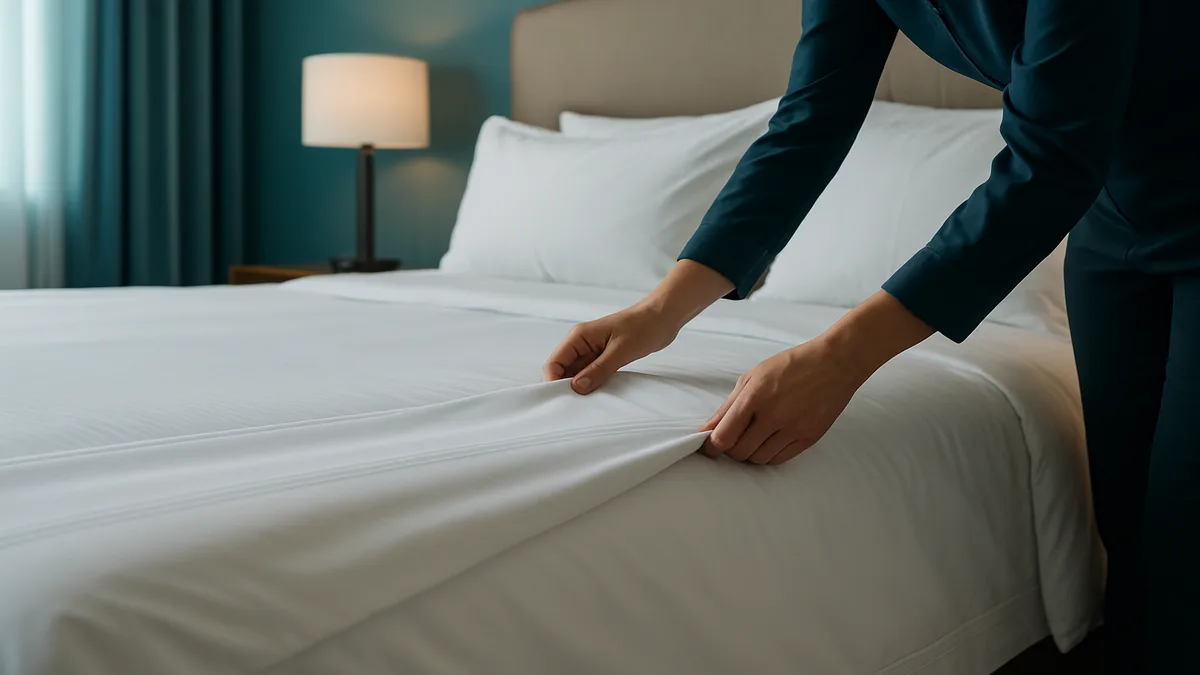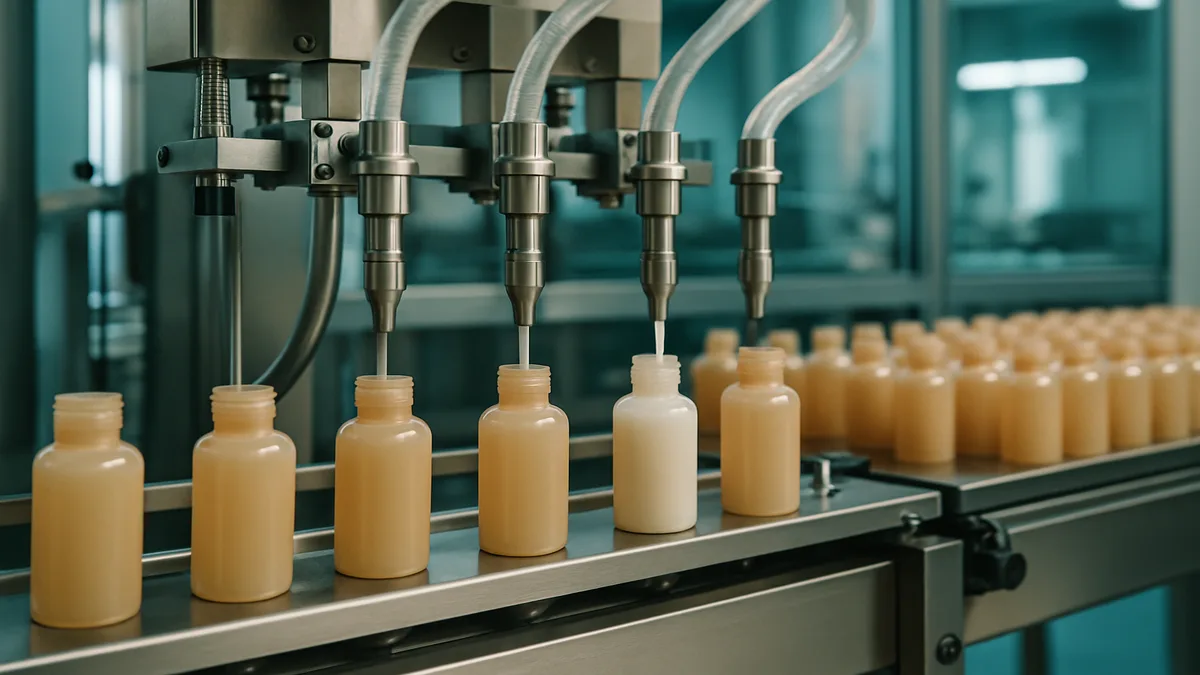
Hotels account for 56.2% of global toiletries market revenue. That is a $13.6 billion slice of the $24.3 billion hotel toiletries market, and it is growing at 10.9% CAGR through 2030. But here is the detail most manufacturers miss: the majority of those hotel toiletries are not branded by the manufacturer. They carry the hotel’s name, the hotel’s logo, the hotel’s fragrance story. They are private label products manufactured under OEM contracts.
For manufacturers, private label hotel toiletries represent the highest-volume, most predictable revenue stream in the hospitality supply market. A single OEM contract with a mid-tier hotel chain can generate $2-10 million annually in recurring production orders. A contract with a major brand — Marriott, Hilton, IHG, Hyatt — can produce $20-50 million or more.
The challenge is not demand. It is access, compliance, and operational execution. If you are new to the hospitality supply market, start with our guide to becoming a hotel supplier to understand vendor portals, GPOs, and the approval process. This guide covers the complete OEM opportunity: how private label works in hospitality, margin structures, formulation customization, regulatory requirements across jurisdictions, quality testing protocols, and how to structure a pitch that gets you into the room with hotel chain procurement teams.
How Private Label Works in Hospitality
The Three Private Label Models
Model 1: Full White Label The manufacturer produces a standard formulation, and the hotel applies its own branding (label, packaging, fragrance name). The manufacturer has minimal involvement in brand or formulation decisions. This is the commodity end of the market — high volume, low differentiation, price-competitive.
- Best for: Budget and midscale hotel segments (Courtyard, Fairfield, Holiday Inn Express).
- Manufacturer involvement: Low. Produce to standard spec; apply hotel branding.
- Margins: 25-35% for the manufacturer.
Model 2: Custom Formulation Private Label The hotel specifies key formulation attributes — fragrance profile, ingredient positioning (sulfate-free, paraben-free, organic), viscosity, color — and the manufacturer develops a custom formulation to meet those specifications. The hotel owns the brand and packaging; the manufacturer owns the formulation IP.
- Best for: Upper upscale and luxury segments (Westin, Le Meridien, Renaissance, Kimpton).
- Manufacturer involvement: High. Formulation R&D, stability testing, iterative sampling.
- Margins: 35-50% for the manufacturer.
Model 3: Co-Developed Brand Partnership The manufacturer and hotel jointly develop a branded amenity line — often with a celebrity perfumer, a sustainability narrative, or a regional ingredient story. The manufacturer may share brand credit (“Crafted by [Manufacturer] for [Hotel Brand]”). This model is increasingly common in lifestyle and boutique segments.
- Best for: Luxury and lifestyle brands (W Hotels, EDITION, Autograph Collection, Vignette Collection).
- Manufacturer involvement: Very high. Shared creative input, marketing collaboration, ongoing product development.
- Margins: 40-60% for the manufacturer, reflecting R&D investment and brand contribution.
The Economic Structure
Understanding the margin waterfall helps manufacturers price correctly and negotiate effectively.
| Cost Component | % of Hotel’s Purchase Price | Notes |
|---|---|---|
| Raw materials | 15-25% | Varies dramatically by formulation tier (commodity vs. organic/natural) |
| Manufacturing labor | 8-12% | Filling, capping, labeling, QC inspection |
| Packaging materials | 12-20% | Bottle/tube, cap, label, carton; premium packaging can exceed 25% |
| Overhead (facility, utilities, depreciation) | 8-12% | Scale-dependent; larger runs amortize fixed costs more effectively |
| R&D amortization | 2-5% | Custom formulation development costs spread across contract term |
| Quality testing / compliance | 3-5% | Stability testing, microbial testing, regulatory documentation |
| Logistics to hotel/distributor | 5-8% | Depends on distribution model; FOB factory vs. delivered |
| Manufacturer margin | 25-60% | Range reflects model type and negotiating position |
The critical number: For a hotel paying $0.50 per unit (30ml shampoo bottle, private label), the manufacturer’s cost of goods is typically $0.20-$0.35, yielding a gross margin of 30-60%. At 500,000 units per month — a reasonable volume for a single mid-tier hotel chain contract — that is $75,000-$150,000 in monthly gross profit from one client.
Formulation Customization: What Hotels Actually Ask For
Hotel procurement teams approach private label formulation with varying levels of specificity. Understanding the typical request spectrum helps manufacturers prepare. For the unit economics and margin benchmarks of the broader amenities category, see our hotel bathroom amenities wholesale guide.
The Request Spectrum
Level 1 — Fragrance Only “We want our current shampoo, conditioner, body wash, and lotion formulations, but in a custom fragrance that reflects our brand identity.”
This is the most common request and the lowest-barrier entry point for manufacturers. You maintain your base formulations and develop 2-3 custom fragrance profiles for the hotel to evaluate. Fragrance development typically costs $5,000-$20,000 and takes 8-12 weeks for sampling through approval.
Level 2 — Fragrance + Ingredient Position “We want a sulfate-free, paraben-free formulation with a lavender-cedarwood fragrance profile and our brand story printed on the label.”
This requires reformulation of your base products to meet specific “free-from” claims. Development timeline: 12-20 weeks including stability testing. Increasingly standard as hotel chains adopt sustainability mandates — Marriott’s Serve 360, Hilton’s Travel with Purpose, and IHG’s Journey to Tomorrow all push ingredient transparency.
Level 3 — Full Custom Formulation “We want a proprietary formulation using locally sourced ingredients (e.g., Hawaiian kukui nut oil, Mediterranean olive oil) with organic certification, in custom packaging, with a complete sustainability story.”
This is the premium opportunity. Full R&D engagement: 6-12 months from brief to production. Costs: $25,000-$100,000+ in formulation development, depending on complexity and certification requirements. But the manufacturer who delivers this becomes virtually irreplaceable — switching costs for the hotel are enormous.
Minimum Order Quantities (MOQs)
MOQs are a negotiation point that can make or break a deal. Hotels want low MOQs to limit inventory risk; manufacturers need minimum runs to cover setup costs.
| Product Format | Typical MOQ | Negotiable Range | Setup Cost Driver |
|---|---|---|---|
| Liquid in custom bottle | 10,000-50,000 units | 5,000 (at premium pricing) | Bottle mold tooling ($5K-$25K) |
| Liquid in stock bottle, custom label | 5,000-25,000 units | 2,500 | Label print setup ($500-$2,000) |
| Solid bars in custom mold | 5,000-20,000 units | 3,000 | Bar mold ($2K-$8K) |
| Bulk for dispensers | 1,000-5,000 units (500ml-1L) | 500 | Minimal; uses standard filling line |
| Sachet / single-use | 25,000-100,000 units | 10,000 | Sachet tooling and filling line setup |
Pro tip: Offer tiered MOQ pricing. Hotels accept higher per-unit pricing for lower initial MOQs if the contract includes pricing step-downs at volume thresholds. This gets the hotel started without overcommitting, and creates a built-in incentive to consolidate volume with you as the relationship matures.
Stop chasing hotels manually. InnLead.ai’s 12 AI agents scan renovation signals, identify procurement contacts, and book meetings with hotel buyers — automatically. Get Early Access
Regulatory Compliance: The Non-Negotiable Foundation
Hotel toiletries are cosmetic products. Every jurisdiction where a hotel operates imposes regulatory requirements on the products available to guests. Manufacturers must ensure compliance across all markets where their hotel client operates — which, for a global chain, means navigating multiple regulatory frameworks simultaneously.
United States: FDA Regulations
The FDA regulates cosmetics under the Federal Food, Drug, and Cosmetic Act (FD&C Act) and the Fair Packaging and Labeling Act (FPLA).
Key requirements:
- Product safety: Manufacturer is responsible for substantiating product safety before marketing. No pre-market FDA approval required, but products must not be adulterated or misbranded.
- Labeling: Ingredients listed in descending order of predominance using INCI nomenclature. Label must include product identity, net contents, manufacturer/distributor name and address.
- Color additives: Must be FDA-approved for intended use. Applies to dyes and pigments in shampoos, soaps, and lotions.
- Drug claims: If your product claims to treat or prevent a condition (anti-dandruff, sunscreen), it is regulated as a drug and requires separate compliance including an OTC Drug Facts label.
- Fragrance allergen disclosure: Not currently required by FDA (unlike EU), but increasingly requested by hotel chains proactively.
Modernization Regulation and Accountability in Cosmetics Act (MoCRA) — December 2022:
- Manufacturers must register facilities and list products with FDA.
- Adverse event reporting now mandatory.
- FDA gained authority to mandate recalls.
- Good Manufacturing Practice (GMP) requirements issued.
- Fragrance allergen disclosure rules pending.
MoCRA significantly elevated U.S. cosmetics regulation. Manufacturers not yet compliant face increasing risk.
European Union: EU Cosmetics Regulation (EC 1223/2009)
The EU framework is more prescriptive than the U.S. system.
Key requirements:
- Responsible Person: Every cosmetic placed on the EU market must have a designated Responsible Person (RP) within the EU/EEA who ensures regulatory compliance.
- Product Information File (PIF): Comprehensive technical dossier including safety assessment, manufacturing method, proof of claimed effects, and animal testing data (or evidence of non-testing).
- Cosmetic Product Safety Report (CPSR): Conducted by a qualified safety assessor. Required for every product before market placement.
- CPNP Notification: Products must be notified through the Cosmetic Products Notification Portal before being placed on the EU market.
- Ingredient restrictions: Over 1,600 substances banned; extensive list of restricted substances with maximum concentrations.
- Fragrance allergen labeling: 26 identified fragrance allergens must be individually listed on the label if present above threshold concentrations.
- 2026 ban on mini-amenities: The EU ban on individually packaged hotel amenities takes effect in 2026, reshaping packaging requirements.
Other Key Markets
UK: Post-Brexit, the UK has its own cosmetics regulation (essentially mirroring EU 1223/2009 with UK-specific adaptations). Requires a UK Responsible Person.
China: Animal testing was historically required for imported cosmetics. Since May 2021, exemptions exist for general cosmetics (not special-use), but manufacturers must provide alternative safety data. Registration through NMPA required.
Middle East (GCC): Generally follows GSO (Gulf Standards Organization) standards, which reference EU and ISO norms. Halal certification increasingly expected for hotel amenities in the region.
Compliance Cost Structure
| Compliance Activity | Cost Range | Timeline | Frequency |
|---|---|---|---|
| FDA facility registration + product listing | $1,000-$5,000 | 2-4 weeks | Annual renewal |
| EU Responsible Person service | $3,000-$15,000/year | Ongoing | Annual |
| Cosmetic Product Safety Report (EU) | $2,000-$8,000 per product | 4-8 weeks | Per new product/reformulation |
| CPNP notification | $500-$2,000 per product | 1-2 weeks | Per product per market |
| Stability testing (ICH guidelines) | $3,000-$10,000 per product | 3-12 months | Per new product/reformulation |
| Microbial challenge testing | $1,500-$4,000 per product | 4-8 weeks | Per product |
| Preservative efficacy testing | $1,000-$3,000 per product | 6-8 weeks | Per product |
| Heavy metals / contaminant testing | $500-$1,500 per product | 2-3 weeks | Per batch (sampling) |
Total compliance cost for a new private label product line (5 SKUs, U.S. + EU markets): $30,000-$80,000. This is a one-time investment per product line that amortizes across millions of units over the contract lifetime.
Quality Testing Requirements
Hotel chains impose quality testing requirements that often exceed regulatory minimums. Manufacturers must be prepared for:
Standard Testing Battery
-
Stability testing: Accelerated (40 degrees C / 75% RH for 6 months) and real-time (25 degrees C / 60% RH for 12-24 months) stability per ICH guidelines. Hotels need documented shelf life claims.
-
Microbiological testing: Total aerobic count, yeast and mold count, and specific pathogen testing (Staphylococcus aureus, Pseudomonas aeruginosa, Escherichia coli) per USP or ISO 17516.
-
Preservative efficacy testing (PET/Challenge Test): Demonstrates the preservative system can prevent microbial growth over the product’s shelf life. Critical for natural/organic formulations with plant-based preservative systems.
-
Dermatological testing: Patch testing or HRIPT (Human Repeat Insult Patch Test) for irritation and sensitization. Luxury hotel chains frequently require this; midscale chains may accept existing data on similar formulations.
-
Compatibility testing: Product-packaging interaction testing ensures the formulation does not degrade the container (or vice versa) over shelf life. Critical for recycled plastic (PCR) packaging where material composition varies.
-
Fragrance performance testing: Headspace analysis, olfactory evaluation panels, and wash-off retention testing for rinse products. Hotels invest heavily in signature scents; they need documented fragrance longevity.
Hotel Chain-Specific Testing
Major chains add proprietary tests:
- Guest perception panels: Some luxury brands require consumer perception testing (hedonic scoring, preference mapping) with demographically representative panels.
- Dispensability testing: For bulk dispenser systems, testing that the product flows consistently through the dispenser mechanism over the container’s entire life.
- Travel packaging integrity: Drop testing, compression testing, and leak testing for guest takeaway amenities.
How to Pitch Hotel Chains for Private Label Contracts
Getting the pitch meeting is the hardest part. Here is how to structure the approach and the presentation.
Identifying the Decision Maker
Understanding what hotel purchasing managers actually prioritize helps you tailor your pitch to each buyer tier.
| Hotel Chain Size | Primary Decision Maker | Supporting Influencers |
|---|---|---|
| Global chain (Marriott, Hilton, IHG) | VP/Director of Procurement or Brand Standards; often through GPO (Avendra, Birch Street) | Brand managers, sustainability officers, design teams |
| Regional chain (10-50 properties) | VP of Operations or Director of Purchasing | General managers, ownership group |
| Boutique collection (5-15 properties) | Owner/operator or Creative Director | Property managers, guest experience leads |
| Independent hotel | General Manager or Owner | Front office manager, housekeeping director |
The Pitch Deck Structure (7 Slides)
Slide 1: Market Context Open with the hotel’s problem, not your capabilities. Reference the $24.3B toiletries market, sustainability mandates they face, and the regulatory landscape (AB 1162, EU directives) driving product changes.
Slide 2: Your Manufacturing Capabilities Production capacity (units per month), manufacturing certifications (ISO 9001, GMP, ISO 22716), facility locations, and scale-up capability. Include photos of your production facility — not stock images.
Slide 3: Formulation Approach Show the formulation customization spectrum you offer (fragrance-only through full custom). Include 2-3 case studies of previous private label work with sanitized client details. Highlight any sustainability certifications (Ecocert, USDA Organic, Leaping Bunny).
Slide 4: Regulatory Compliance One-page matrix showing your compliance capabilities by market. Hotels operating in multiple jurisdictions need one manufacturer who can handle U.S., EU, UK, and emerging market compliance — not a different vendor per region.
Slide 5: Sustainability Credentials Map your environmental capabilities directly to the hotel chain’s published sustainability goals. For Marriott: align with Serve 360 targets. For Hilton: align with Travel with Purpose. For IHG: align with Journey to Tomorrow. Be specific — “our PCR packaging reduces plastic waste by X%, supporting your 2025 waste reduction target.”
Slide 6: Pricing and MOQ Structure Transparent tiered pricing. Show cost-per-occupied-room-night (the metric hotel finance teams use), not just cost-per-unit. Include tooling investment and amortization schedule.
Slide 7: Timeline and Next Steps Realistic development timeline from contract signature to first production delivery. Propose a specific pilot scope (e.g., “trial at 10 properties for 6 months, with guest satisfaction measurement”).
What Gets You the Meeting in the First Place
Hotel procurement teams receive hundreds of unsolicited pitches. What cuts through:
- Referral from within the chain. A GM or regional director introducing you to procurement is 10x more effective than a cold email.
- Trade show meetings. HD Expo (Las Vegas, May annually), BDNY (New York, November annually), and The Hotel Show Dubai are where procurement teams scout new suppliers. In 2023, BDNY featured 550 exhibitors, and HD Expo hosted 900+ exhibiting companies in 2022.
- Solving a specific regulatory problem. If a hotel chain faces a compliance gap (California AB 1162, EU 2026 mini-amenity ban), and you have a ready solution, urgency creates access.
- Sustainability-first positioning. Hotel sustainability certifications grew 20% between 2022 and 2023. Chains are actively seeking suppliers who can help them meet public sustainability commitments.
Protecting Your Position: Contract Terms That Matter
Once you land the contract, protect your investment with smart contract terms.
Key Terms to Negotiate
- Contract duration: Minimum 3 years. Custom formulation development only makes economic sense if amortized over multi-year volumes.
- Volume commitments: Minimum annual volume with take-or-pay provisions. Hotels benefit from guaranteed pricing; you benefit from predictable production planning.
- Exclusivity scope: Negotiate category exclusivity (you are the sole amenity provider for that brand tier) or geographic exclusivity (sole provider in a region).
- IP ownership: Clarify who owns the formulation IP, the packaging design, and the brand assets. Typically: hotel owns the brand; manufacturer owns the formulation.
- Price adjustment mechanisms: Tie pricing to raw material indices (palm oil, petrochemicals for plastic, essential oil markets) with quarterly or annual adjustment provisions. This protects both parties from commodity price volatility.
- Termination notice: Minimum 12-month notice for contract termination, with wind-down provisions for remaining inventory.
The Private Label Opportunity Window
The hotel toiletries market is in a period of accelerated change. Regulatory shifts (AB 1162, EU directives, MoCRA), sustainability mandates from major chains, and the ongoing shift from mini-bottles to bulk dispensers are forcing hotels to reevaluate existing supplier relationships. When contracts are up for rebid, new manufacturers have an opening.
The global hotel construction pipeline at 15,820 projects and 2.4 million rooms means thousands of new properties need private label amenity programs from scratch. Every Marriott conversion to Four Points Flex, every IHG property joining the Garner brand, every Hilton Spark opening — they all need amenity programs.
Manufacturers who invest in regulatory infrastructure, formulation flexibility, sustainability certifications, and the sales capability to reach hotel procurement teams are positioned to capture a disproportionate share of a $24.3 billion market headed for $45.3 billion by 2030. For a full breakdown of where toiletries fit within the broader hotel operating supplies taxonomy, use our OS&E category checklist to identify cross-sell opportunities.
The OEM contract is the long game in hotel toiletries. The economics — 40-60% margins, multi-year commitments, recurring volume — justify the investment in getting it right. If you need help finding hotel chains actively re-sourcing amenity programs, explore how InnLead.ai surfaces procurement signals.
Use these related guides to keep moving through the same procurement, sales, or market research thread.
Skip the Manual Work
InnLead.ai's 12 AI agents find hotels buying your products, identify procurement contacts, and book meetings -- automatically.
Get Early Access