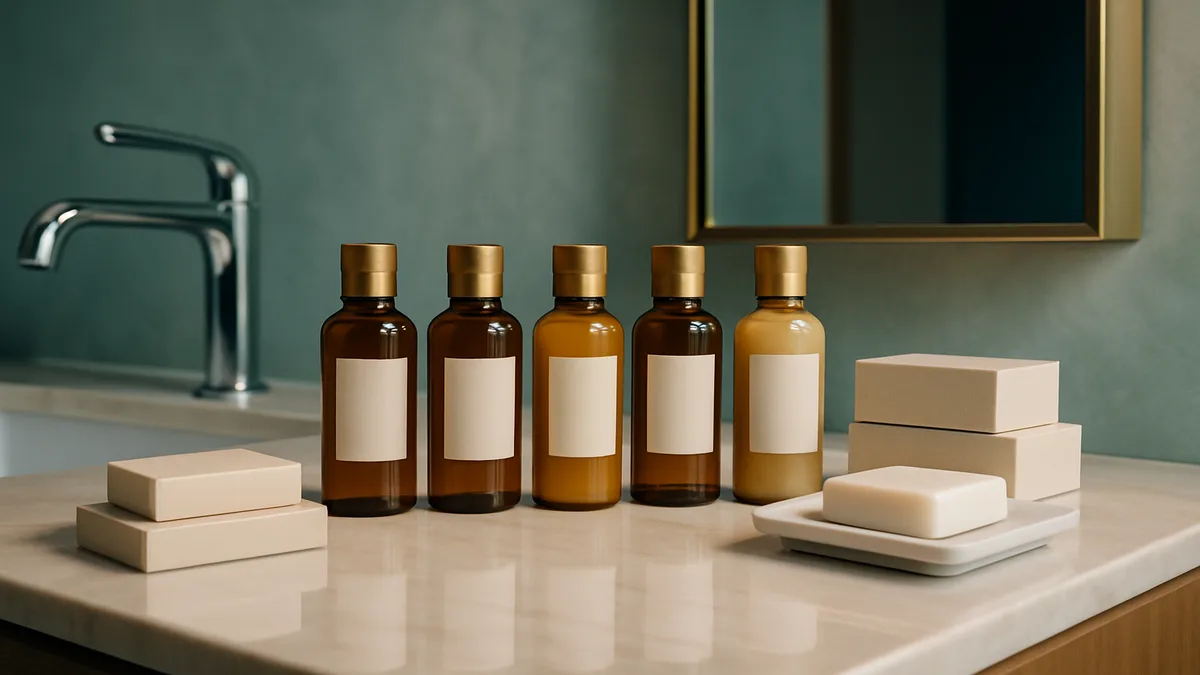
The mini shampoo bottle — that tiny, barely-enough-for-one-wash icon of the hotel experience — is dying. Not because guests stopped liking it. Because legislation, economics, and brand commitments are killing it simultaneously.
California’s AB 1162 banned small plastic amenity containers for large hotels in January 2023 and extended enforcement to all hotels by January 2024. The EU will ban individually packaged hotel amenities outright in 2026. Meanwhile, IHG has phased out mini bottles across its portfolio, and Marriott committed to eliminating small amenity bottles years ago.
For hotel suppliers, this is not a slow transition to prepare for. It is an active market shift worth billions — part of a broader sustainable hotel supplies opportunity valued at $50 billion — and the winners are the companies that understand the dispenser supply chain, refill logistics, and cost math right now.
The Regulatory Timeline: What’s Already Law and What’s Coming
The regulatory pressure is coming from multiple directions. Suppliers who track the timeline can position inventory and sales efforts ahead of each enforcement wave.
| Regulation | Effective Date | Scope | Key Requirements |
|---|---|---|---|
| California AB 1162 (Phase 1) | January 1, 2023 | Hotels with 50+ rooms | No personal care products in plastic containers under 6 oz |
| California AB 1162 (Phase 2) | January 1, 2024 | All hotels, including 50 rooms and under | Same requirements; first offense $500 fine, subsequent $2,000 |
| EU Single-Use Plastics Directive (Phase 3) | July 2023 | All EU member states | On-the-go plastic food containers no longer free |
| EU On-Site Plastics Ban | January 2024 | All EU member states | Single-use cups and containers banned for on-site consumption |
| EU Mini-Amenity Ban | 2026 | All EU member states | Individually packaged hotel amenities banned (mini shampoos, soaps, jams) |
| UK Plastic Bans | 2022 (Scotland), October 2023 (England) | Hotels and hospitality venues | Single-use plastic items prohibited |
California’s AB 1162 was the first-in-nation legislation of its kind, originally inspired by a Santa Cruz County ordinance. It set the template that other jurisdictions are following. For a detailed breakdown of every plastic ban by region, including penalties and compliance timelines, see our regulatory guide.
The EU’s 2026 ban is the most sweeping: it covers not just toiletries but also individually wrapped soaps, conditioner sachets, and even mini jam and butter portions served at breakfast. The goal is all packaging recyclable before 2030.
Which Major Chains Have Already Switched
The largest hotel companies did not wait for enforcement deadlines. They moved early, both for sustainability branding and because the economics made sense at scale.
IHG Hotels & Resorts phased out mini bottles across its brands. With 6,000+ properties and 371 new hotel openings in 2024 alone, IHG’s shift created massive demand for dispenser systems and bulk amenity products. Their 2024 signing of 714 hotels representing 106,200 rooms — a 34% increase year-over-year — means the dispenser supply pipeline only grows from here.
Marriott International committed to eliminating small amenity bottles, aligning with their net-zero 2050 target verified by SBTi. With 1,200+ deals signed in 2024 representing 162,000 rooms, and a pipeline of 596,000 rooms, Marriott’s conversion to dispensers represents one of the largest single-product procurement shifts in hotel supply history.
Hilton is pursuing a 50% reduction in waste sent to landfill by 2030 and a 75% reduction in carbon emissions intensity for managed hotels. Their system of 8,397 hotels and 1,251,068 rooms is systematically reducing single-use plastics, including amenity bottles.
Accor has been aggressive on sustainability, with 58% of 2024 openings under lifestyle brands that emphasize environmental credentials. Their 1,381-hotel pipeline increasingly specifies refillable systems as standard.
The Cost Comparison: Single-Use vs. Refillable Per Room Per Year
This is where the supplier conversation gets concrete. Hotels making the switch need hard numbers, and suppliers who can present this comparison close deals faster.
| Cost Factor | Single-Use Mini Bottles | Refillable Dispenser System |
|---|---|---|
| Product cost per room/night | $0.80 - $1.50 | $0.15 - $0.40 (bulk refill) |
| Annual product cost (200-room hotel, 70% occupancy) | $40,880 - $76,650 | $7,665 - $20,440 |
| Hardware investment (one-time) | $0 | $8,000 - $25,000 (dispensers, mounting) |
| Waste disposal costs | Higher (packaging volume) | 70-80% reduction |
| Housekeeping labor (restocking) | Higher (individual placement) | Lower (bulk refill checks) |
| Breakeven point | — | 4 - 8 months |
| 5-year total cost (200-room hotel) | $204,400 - $383,250 | $46,325 - $127,200 + hardware |
The annual savings range for a 200-room hotel at 70% occupancy falls between $20,000 and $60,000 depending on brand tier, product quality, and local disposal costs. For a luxury property using premium single-use amenities, savings can exceed $80,000 annually.
The payback period on dispenser hardware investment is typically under 8 months. After that, the savings compound every year with zero additional capital expenditure beyond occasional dispenser replacement.
Stop chasing hotels manually. InnLead.ai’s 12 AI agents scan renovation signals, identify procurement contacts, and book meetings with hotel buyers — automatically. Get Early Access
The Supplier Opportunity Map
The shift from single-use to refillable creates distinct opportunities across several supplier categories. This is not a one-product transition — it is an ecosystem change.
Dispenser Hardware Manufacturers
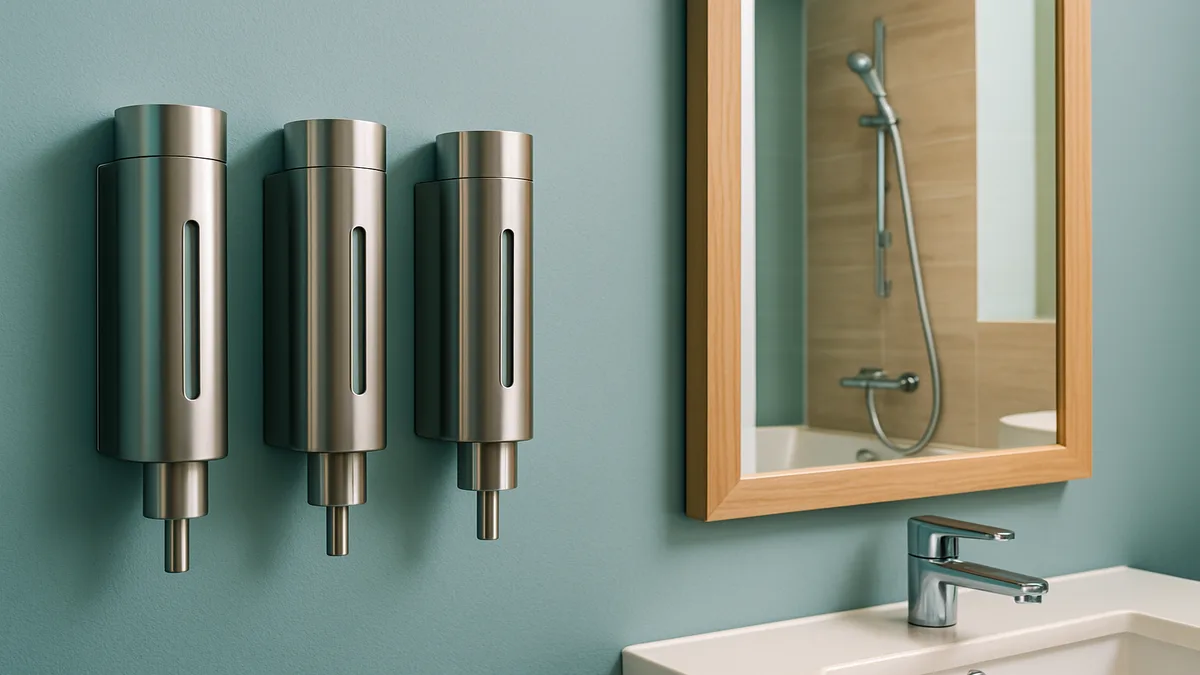
Wall-mounted, shower-integrated, and countertop dispenser systems are the most immediate opportunity. Hotels need:
- Tamper-proof mechanisms to prevent guest theft of product
- Branded faceplates that match property design standards
- Modular systems supporting 3-4 product types (shampoo, conditioner, body wash, hand soap)
- ADA-compliant designs with accessible mounting heights and easy-press mechanisms
- Durable construction rated for 50,000+ actuations
The market segments differently by hotel tier. Economy properties need simple, functional units at volume pricing. Luxury properties demand custom-finished dispensers that integrate with bathroom design, often specifying brushed nickel, matte black, or chrome finishes to match hardware.
Bulk Amenity Formulators and Manufacturers
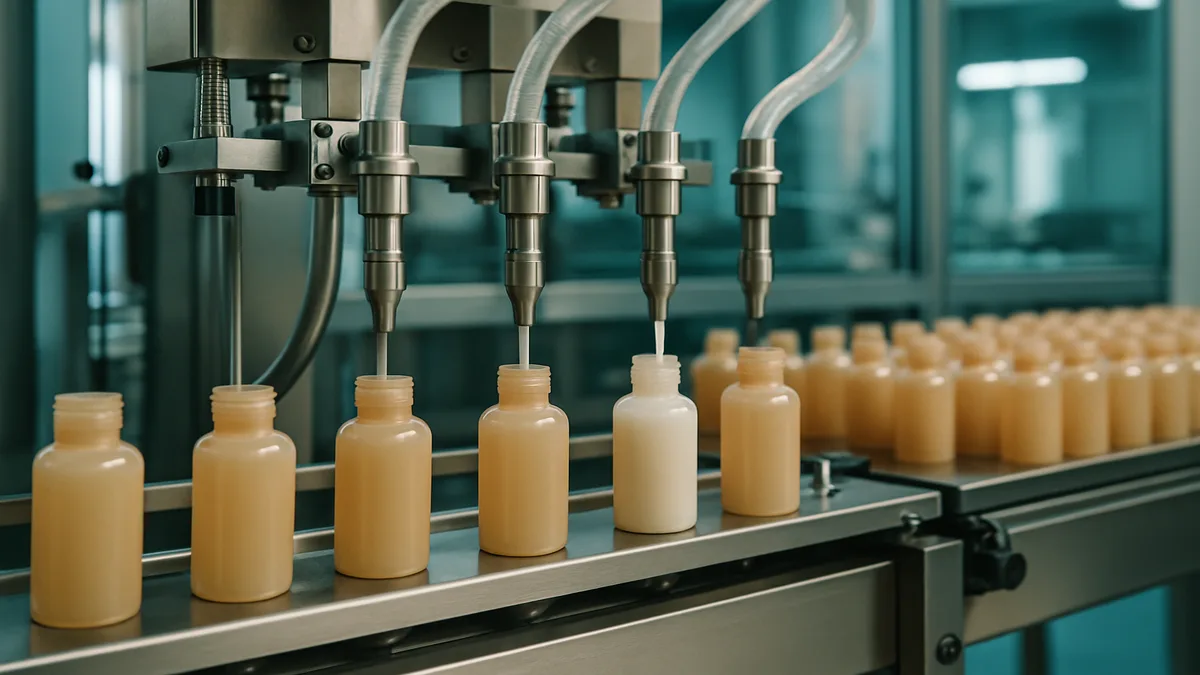
The shift to refillable dispensers does not reduce amenity spending — it restructures it. Hotels still want differentiated scents, premium formulations, and brand-exclusive products. But they want them in 5-liter or 10-liter bulk containers instead of 30ml bottles.
Key considerations for bulk amenity suppliers:
- Formulation stability in larger containers (shelf life of 12-18 months)
- Viscosity optimization for dispenser pump mechanisms
- Eco-certification compatibility (organic, cruelty-free, sulfate-free)
- Custom fragrance development for chain-wide brand identity
- Refill container design that prevents contamination during housekeeping refills
The hotel toiletries market was valued at $24.3 billion in 2024 and is projected to reach $45.3 billion by 2030, growing at a 10.9% CAGR. Hotels account for 56.2% of global market revenue. The bulk segment of this market is growing faster than the overall market as regulations accelerate the transition.
Refill Logistics and Distribution
An underserved segment: the companies managing the refill supply chain between manufacturer and hotel property. This includes:
- Regional distribution of bulk containers to hotel properties
- Automated reorder systems tied to housekeeping consumption data
- Closed-loop container programs where empty bulk containers are collected, sanitized, and refilled
- Inventory management software integrated with hotel procurement platforms
Hotels operating through platforms like Avendra (2,000+ vetted suppliers, up to 15% cost savings) and Birch Street Systems increasingly want dispenser refill programs that integrate with their existing procurement workflows.
Regional Adoption Patterns: Where Demand Is Strongest
The dispenser transition is not happening uniformly. Regulatory pressure and brand commitment vary by region, creating distinct windows of opportunity for suppliers.
North America
California’s AB 1162 created the first mandatory market. Other U.S. states and Canadian provinces are watching California’s enforcement results and considering similar legislation. The U.S. hotel pipeline hit an all-time high of 6,378 projects in Q4 2024, with Dallas and Atlanta leading all global markets. Every new-build property in California must now specify a dispenser system, and properties in other states are increasingly choosing dispensers voluntarily to avoid the risk of future regulations catching them with stranded single-use inventory.
Europe
The EU’s 2026 mini-amenity ban creates a continent-wide switchover deadline. With 1,661 projects and 244,464 rooms in the European hotel pipeline as of Q4 2024, and conversions surging 26% in Q4 2024 to 520 projects, the demand for dispenser systems across Europe will intensify sharply through 2025. The UK has already implemented single-use plastic bans in Scotland (2022) and England (October 2023), putting British hotels ahead of the EU timeline.
Middle East
The Middle East hotel boom — 659 projects and 163,816 rooms at an all-time record — is driven primarily by new builds in Saudi Arabia and the UAE. While regulatory pressure on single-use plastics is less advanced than in Europe or California, major international chains operating in the region (Marriott, Hilton, IHG, Accor) are implementing their global sustainability standards in new Middle East properties. Luxury and upscale projects, which represent 55% of the Middle East pipeline, are specifying premium dispenser systems as part of their design standards.
Asia-Pacific
Asia-Pacific’s record pipeline of 1,977 projects is dominated by India (514 projects), Vietnam (253 projects), and Indonesia (208 projects). Regulatory pressure on single-use plastics varies widely across the region, but international chain expansion is importing dispenser requirements. Luxury projects in Asia-Pacific grew 9% year-over-year to 241 projects, and these properties uniformly specify refillable systems.
Guest Perception: The Data on How Travelers Actually Feel
One concern hotel operators raise about dispensers is guest satisfaction. The data addresses this directly.
Multiple hotel chains have reported that guest satisfaction scores remain stable or improve after switching to refillable dispensers, primarily because modern dispenser systems deliver a better product experience than a 30ml bottle. Guests get as much product as they need rather than rationing a tiny bottle. Luxury properties report that wall-mounted dispensers with premium formulations score higher in amenity satisfaction than individually bottled products.
The sustainability angle also matters: 73% of tourists prefer hotels with sustainable practices according to UNWTO research from 2023. Dispensers are a visible, tangible demonstration of environmental commitment that guests notice and respond to positively.
The only consistent negative feedback involves dispenser malfunction — pumps that jam, units that leak, or empty dispensers that housekeeping failed to refill. This reinforces the importance of dispenser quality, maintenance programs, and housekeeping training — all of which represent ongoing revenue for the right supplier.
Common Pitfalls Suppliers Should Avoid
1. Underestimating dispenser maintenance. Hotels need replacement pump mechanisms, mounting hardware, and spare units. Suppliers who sell dispensers without maintenance programs lose the ongoing relationship.
2. Ignoring brand standards by tier. A Hampton Inn has different dispenser specifications than a Waldorf Astoria. Suppliers must understand that major chains maintain detailed brand standard manuals specifying everything from dispenser finish to product scent profiles.
3. Treating this as a commodity play. The lowest-cost dispenser does not win. Hotels evaluate total cost of ownership including durability, aesthetic fit, refill compatibility, and supplier reliability. Vendors who compete solely on unit price lose to those offering system-level solutions.
4. Missing the renovation trigger. Guest room renovations cost $8,000 to $25,000 per room, and the PIP backlog is estimated at $12-15 billion. Properties undergoing renovation are the highest-probability buyers of dispenser systems because the bathroom is already being torn apart.
5. Neglecting housekeeping training support. Dispensers only work if housekeeping staff use them correctly. Suppliers who provide training materials, quick-reference cards, and multilingual instructions reduce complaint rates and increase reorder likelihood.
What This Means for Your Sales Pipeline
The dispenser transition is not future planning — it is active procurement happening across every major chain right now. The global hotel pipeline hit an all-time record of 15,820 projects representing 2.4 million rooms in Q4 2024. Every one of those new-build properties needs an amenity delivery system. And with renovation costs increasing 6.25% year-over-year and PIP costs up 30%+ versus pre-COVID levels, owners are motivated to choose the option with the lowest ongoing cost.
The suppliers winning this market are the ones reaching hotel procurement teams at the right moment: when a PIP is issued, when a renovation permit is filed, when a new franchise agreement is signed.
The question is whether you are finding those signals manually — or whether your sales intelligence is automated enough to capture them at scale.
The bottom line: The single-use amenity era is ending. Regulations have made it illegal in California and will make it illegal across the EU by 2026. Economics have made it irrational for any hotel doing the math. And the major chains have made it policy. Suppliers who position themselves in dispensers, bulk formulations, and refill logistics are building revenue streams that compound for the next decade. Those still focused exclusively on mini bottles are selling into a shrinking market with a regulatory expiration date.
Use these related guides to keep moving through the same procurement, sales, or market research thread.
Skip the Manual Work
InnLead.ai's 12 AI agents find hotels buying your products, identify procurement contacts, and book meetings -- automatically.
Get Early Access