The Middle East hotel market is not just growing — it is setting records that dwarf every other region on the planet. The region’s hotel construction pipeline has reached an all-time high, with 659 projects representing 163,816 rooms, marking an 8% year-over-year increase. Saudi Arabia alone accounts for the largest single-country share, with its pipeline surging to 349 projects and 94,287 rooms — an all-time national record, up 10% in projects and 18% in rooms year-over-year.
For hotel product suppliers and manufacturers worldwide, the Gulf represents the single largest greenfield opportunity in global hospitality. Nowhere else on earth is this volume of hotel capacity being built at this pace, at this quality level, with this much government-backed financial commitment.
But capturing this opportunity requires more than competitive pricing and a product catalog. The Middle East procurement landscape operates on different rules than Western markets — relationships precede transactions, local partnerships are often mandatory, cultural fluency separates serious suppliers from tourists, and the scale of individual projects dwarfs anything in North American or European markets.
This guide covers the market data, the mega-project pipeline, procurement dynamics, cultural norms, and practical entry strategies that international suppliers need to sell hotel products in Dubai, Saudi Arabia, and the broader Gulf region.
The Gulf Hotel Boom: Market Scale and Trajectory
Dubai: The World’s Hospitality Capital
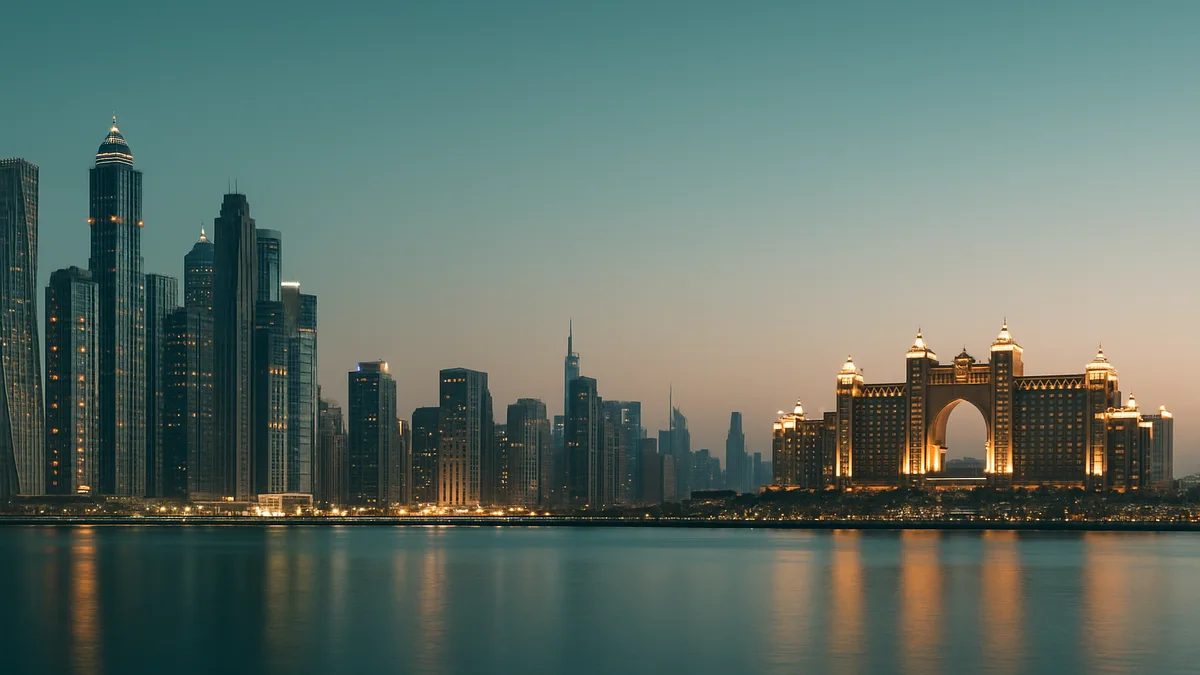
Dubai’s hotel inventory exceeds 200,000 rooms across every segment, from ultra-luxury palatial resorts to budget-friendly city hotels. The emirate continues to add capacity at a pace that outstrips most entire countries, with 87 hotel debuts currently in the development pipeline.
Dubai’s hospitality demand is structurally underpinned by multiple pillars that make it resilient and growing:
- Year-round tourism driven by a packed events calendar: the Expo 2020 legacy district, Formula 1 Abu Dhabi Grand Prix proximity, Dubai Shopping Festival, global exhibitions at Dubai World Trade Centre, and a strategic positioning as the winter-sun destination for European and Asian travelers
- Regional business hub status for MENA, South Asia, Central Asia, and East Africa. When companies need a regional headquarters or meeting point, Dubai is the default choice, driving sustained corporate and group travel demand.
- Government investment in tourism infrastructure through the Dubai Department of Economy and Tourism, which has published ambitious targets for annual visitor numbers and tourism revenue through 2030 and beyond
- Airlift capacity through Emirates Airlines and flydubai connecting to 260+ global destinations, making Dubai one of the most accessible cities on earth from virtually any origin market
For suppliers, Dubai serves a critically important dual role: it is both a massive end-market for hotel products (200,000+ rooms need ongoing supply) and the gateway to the broader Gulf region. Many regional hotel groups, developers, procurement firms, and brand offices are headquartered in Dubai, even when their properties span the entire GCC and beyond. Establishing a Dubai presence gives you access to buyers across the region.
Saudi Arabia: Vision 2030 and the Mega-Project Pipeline
Saudi Arabia’s transformation under Vision 2030 is the largest single driver of hotel supply demand in the world today, and likely for the next decade. Our dedicated Saudi Arabia Vision 2030 supplier guide covers the mega-project pipeline, local content requirements, and procurement processes in full detail. The Kingdom is targeting 500,000+ hotel rooms by 2030, a near-doubling from the approximately 280,000 rooms available today. Achieving this goal requires building more hotel rooms in 7 years than many developed nations have accumulated over decades of organic growth.
The scale and ambition of individual projects is staggering. Each mega-project represents billions of dollars in hospitality supply contracts:
NEOM: The $500 billion mega-city project on the northwest Red Sea coast is the most ambitious urban development project in history. The hospitality component includes:
- THE LINE: A 170-kilometer linear city designed for 9 million residents, with hotels integrated throughout the development
- Trojena: A mountain tourism destination that will host the 2029 Asian Winter Games, featuring luxury ski resorts and year-round mountain tourism hotels
- Sindalah: An ultra-luxury island resort developed with Yacht Club de Monaco, targeting the global super-yacht and ultra-high-net-worth traveler market
- OXAGON: An industrial and innovation hub with supporting hospitality infrastructure
The hospitality component of NEOM alone represents billions in FF&E, amenities, linens, technology, and operating supply contracts over the coming years.
The Red Sea Global: A luxury and regenerative tourism destination spanning 28,000 square kilometers along Saudi Arabia’s western coast. The masterplan includes 50+ hotels across multiple islands and inland sites, with the first properties already opening. The development philosophy emphasizes sustainability and ultra-luxury positioning, which means premium supply specifications and higher-margin product categories.
Qiddiya: A 367-square-kilometer entertainment mega-project southwest of Riyadh featuring theme parks, motorsport facilities, water and nature experiences, sports venues, and multiple hotel developments across every price point from family-friendly to ultra-luxury.
Diriyah Gate: A $20 billion heritage and cultural destination on the outskirts of Riyadh, centered on the UNESCO World Heritage site of At-Turaif. The project includes luxury hotels (Aman and other ultra-luxury operators), museums, retail, dining, and cultural venues. The heritage context creates unique supply requirements for products that harmonize with traditional Najdi architecture.
Jeddah Central and Jeddah Tower district: Continued development of mega-projects in Saudi Arabia’s second city, with significant hospitality components integrated into mixed-use developments.
The Saudi Tourism Authority (STA) is the central coordination body for the Kingdom’s tourism strategy and an essential contact for suppliers seeking to understand the project pipeline, procurement timelines, and market access requirements.
UAE Beyond Dubai
Abu Dhabi continues to invest substantially in hospitality infrastructure. Saadiyat Island’s cultural tourism district (Louvre Abu Dhabi, future Guggenheim Abu Dhabi, Zayed National Museum) is attracting hotel development from luxury operators. Yas Island (Ferrari World, Warner Bros. World, Yas Marina Circuit for F1) continues to add hotel capacity for entertainment tourism. The Jubail Island eco-tourism project represents a new category of sustainable hospitality development. The UAE as a whole has 136 new hotels in its development pipeline.
Broader GCC Markets
Qatar: Post-FIFA World Cup 2022, Qatar’s hospitality market is pivoting to sustain the momentum through business tourism, cultural events, and regional hub positioning.
Oman: Targeting upscale and luxury tourism development with a focus on nature, heritage, and wellness — product categories where premium supply specifications create strong margins for suppliers.
Bahrain: Compact market but actively developing hospitality infrastructure for financial tourism and events.
Regional Pipeline Summary
| Market | Projects in Pipeline | Rooms in Pipeline | YoY Growth | Key Driver |
|---|---|---|---|---|
| Saudi Arabia | 349 | 94,287 | +10% projects, +18% rooms | Vision 2030, mega-projects, tourism diversification |
| UAE | 136 | ~35,000+ | Steady | Tourism infrastructure, Expo legacy, business hub |
| Dubai (within UAE) | 87 hotel debuts | ~22,000+ | Continued expansion | Year-round tourism, events, gateway status |
| Middle East Total | 659 | 163,816 | +8% YoY | All-time record across the region |
| Luxury Segment | 199 | 44,059 | Record high | Ultra-luxury and prestige positioning |
| Upscale Segment | 166 | 47,974 | Growing | International brand expansion |
The luxury and upscale segments together account for 55% of the entire Middle East pipeline. This is significant for suppliers because these segments purchase higher-specification products at premium prices, maintain stricter brand standard requirements that create recurring revenue through defined replacement cycles, and involve design-led procurement processes where product quality and differentiation matter more than pure price competition.
How Procurement Works in the Gulf
Understanding the cultural and structural dynamics of Gulf procurement is non-negotiable for success in this market. Suppliers who apply Western procurement assumptions will waste time, money, and goodwill.
Relationships Precede Transactions
This is not a cliche — it is the fundamental operating principle of Gulf business culture. In Western markets, an RFP response can win business based on merit alone. A supplier might never meet the buyer face-to-face and still secure a contract through a strong written proposal and competitive pricing.
In the Gulf, this almost never happens. A procurement director at a Gulf hotel group will not award a significant contract to a supplier they have never met in person, regardless of how strong the proposal looks on paper. The proposal may open the door, but the relationship closes the deal.
This means multiple face-to-face meetings, typically over meals, where conversation ranges well beyond business. Gulf business culture places enormous value on knowing the person behind the company — their character, their commitment to the market, their reliability as a human being before they are evaluated as a commercial partner. Suppliers who rush to close, who send proposals without visiting, or who try to conduct business entirely over email and video calls will be outcompeted by those who invest the time to build genuine relationships.
Practical implication: Budget for a minimum of 2-3 relationship-building trips to the Gulf before expecting your first significant order. Each trip should include meetings with procurement contacts at their offices, visits to their existing properties to understand their current supply needs, shared meals and social engagement outside of formal business settings, and introductions to other contacts in their network. The relationship capital you build on these trips compounds over years and opens doors to opportunities you would never discover through cold outreach.
The Local Partner Requirement
Many Gulf markets require or strongly incentivize international companies to work through a local partner for import, distribution, and commercial activities. In Saudi Arabia, the Commercial Agencies Law has historically required foreign companies to appoint a Saudi commercial agent for direct import and distribution. While regulations have evolved under Vision 2030 reforms to become significantly more foreign-investment friendly — including allowing 100% foreign ownership in many sectors — local partnerships remain the most practical market entry strategy for hotel supply companies.
The reason is not just regulatory. A well-connected local partner provides:
- Existing relationships with hotel groups, developers, procurement firms, and project management companies that took years to build
- Knowledge of local regulations, customs procedures, import tariffs, product certification requirements (SASO for Saudi Arabia, ESMA for UAE), and business registration processes
- Arabic-language communication for day-to-day business, documentation, and contract negotiations
- Logistics infrastructure for warehousing, last-mile delivery, and inventory management within the market
- Credential verification and trust transfer — their established reputation backstops yours with buyers who do not yet know your company
How to find a local partner:
- The Dubai Hotel Show and Arabian Travel Market are the primary networking venues for identifying potential distribution partners. Both events attract trading companies, agents, and distributors who specifically seek international supply partnerships.
- Dubai Chamber of Commerce and the Saudi Arabian General Investment Authority (SAGIA, now part of the Ministry of Investment) maintain directories of registered trading and distribution companies
- Industry contacts and referrals from existing Gulf hotel clients or from your network of international hotel chain contacts who operate in the region
- Trade missions organized by your home country’s export promotion agency (U.S. Commercial Service, UK Department for International Trade, German Trade and Invest, etc.)
- Specialized trade consultancies that focus on Gulf market entry for hospitality suppliers
Selecting the right local partner is one of the most consequential decisions you will make in this market. Take time to evaluate multiple candidates, check their references with existing principals, and start with a limited-scope agreement before committing to exclusivity.
Decision-Making Hierarchy
Gulf hotel procurement decisions often involve more stakeholders and a more hierarchical approval structure than Western organizations. The General Manager, Director of Operations, Director of Finance, and sometimes the property owner or owner’s representative may all have input or approval authority for supply contracts, in addition to the procurement manager who manages the day-to-day process.
Suppliers who engage only with the procurement contact and ignore the broader stakeholder map frequently find their proposals stalled without clear explanation. Building relationships across the decision-making hierarchy is essential. A procurement manager may champion your product, but the GM’s preference for an established supplier or the finance director’s concern about payment terms can override that recommendation.
Payment Terms and Financial Practices
Payment practices in the Gulf vary significantly by buyer type, and understanding these differences prevents both financial strain and relationship damage.
- Major international chains (Marriott, Hilton, IHG, Hyatt, Accor-managed properties): Payment terms generally align with global standards, typically Net 30-60. These organizations have structured procurement and accounts payable processes. Credit checks and insurance requirements apply.
- Regional hotel groups (Rotana, Jumeirah, Emaar Hospitality, SAUDIA Hotels, Dur Hospitality): Terms are often longer, Net 60-90, and may be relationship-dependent. Initial orders may require partial advance payment or letter of credit until trust is established. Once a relationship is proven, terms typically improve.
- Developer-owned and operated properties: Payment timelines can be unpredictable, particularly during construction and pre-opening phases when cash flow is managed across multiple project priorities. Staged payment structures tied to specific delivery milestones are strongly advisable.
- Government-linked mega-projects (NEOM, Red Sea Global, Qiddiya, Diriyah Gate): Procurement follows formal tender processes with structured payment terms, comprehensive contractual protections, and compliance requirements. However, timelines can extend due to project complexity, multi-layer approval processes, and the unprecedented scale of these developments.
Stop chasing hotels manually. InnLead.ai’s 12 AI agents scan renovation signals, identify procurement contacts, and book meetings with hotel buyers — automatically. Get Early Access
Market Entry Strategy: A Practical Roadmap
Step 1: Identify Your Product-Market Fit
Not every hotel product category has equal demand dynamics in the Gulf. The luxury and upscale concentration of the pipeline — 55% of all projects — means that premium products outperform value-tier offerings in this market. Suppliers offering mid-tier or economy products can still find opportunities, but the margin story and procurement access are strongest in the premium segments.
Highest-demand product categories for the Gulf:
- FF&E for new-build luxury and upscale properties: casegoods, seating, specialty furniture, custom pieces
- Premium linens and textiles: high thread count, custom-embroidered, hotel-branded programs
- Luxury bathroom amenities: branded, sustainably formulated, large-format bottles or premium dispenser systems
- Outdoor furniture engineered for extreme heat (50C+) and humidity, UV resistance, sand and salt exposure
- Specialty lighting and decorative fixtures for lobby and public area installations
- Operating supplies at unprecedented scale for mega-project openings with thousands of rooms launching simultaneously
- Smart room technology and IoT solutions aligned with the Gulf’s emphasis on innovation and guest experience
- Kitchen and restaurant equipment for the high-end F&B concepts that luxury Gulf properties feature
Step 2: The Dubai Hotel Show as Your Entry Point
The Hotel Show Dubai is the most efficient single event for suppliers entering the Gulf market. Its dramatic growth trajectory — from approximately 300 exhibiting firms in 2022 to 730+ in 2023 to 1,000+ from 48 nations with 34,000+ visitors in 2024 — reflects the region’s hospitality investment surge and the growing international supplier interest in the Gulf.
Why the Hotel Show works as a market entry platform:
- Concentrated audience of Gulf hotel procurement professionals, operations directors, facilities managers, and F&B directors — the people who sign purchase orders
- Dedicated specialized tracks including the Hospitality Procurement Forum, HITEC Dubai Conference, Hospitality Leadership Forum, and F&B Forum provide structured content and networking environments
- Face-to-face meeting opportunities with potential local partners, direct hotel buyers, developer procurement teams, and project management companies in a single venue over three days
- Regional and international media coverage that provides brand visibility beyond the event itself
Booth strategy for the Hotel Show Dubai:
- Invest in a professional, premium-quality booth build that reflects the positioning of your products. Gulf buyers evaluate suppliers by presentation quality, and a budget booth signals a budget supplier — regardless of your actual product quality.
- Bring Arabic-language collateral alongside English materials, with pricing presented in both AED and USD
- Staff with team members who have Gulf market experience, cultural training, or ideally Arabic language capability
- Offer traditional Arabic hospitality at your booth — good coffee, dates, comfortable seating for conversations. This is expected, not optional, and signals cultural respect.
- Schedule meetings in advance using the show’s hosted buyer matching program and your own pre-show outreach to identified targets
- Offer manufacturing facility visit invitations or showroom visits as a tangible follow-up commitment that extends the relationship beyond the show floor
Step 3: Establish Your Regional Infrastructure
Supplying Gulf hotels from an international manufacturing base requires logistics infrastructure that minimizes lead times, enables responsive service, and provides local support capability.
Options ranked by commitment and investment level:
-
Export with local agent (lowest commitment, fastest to implement): Appoint a Dubai-based trading agent or distribution company that handles import clearance, customs, warehousing, and delivery to hotels. Your margin is reduced by the agent’s commission (typically 15-25%), but your risk, overhead, and capital investment are minimal. This is the recommended starting approach for most suppliers entering the market.
-
Regional warehouse (medium commitment): Lease warehouse space in a Dubai free zone. Jebel Ali Free Zone (JAFZA) is the most common choice for hotel supply importers due to its proximity to Jebel Ali Port (the Middle East’s largest container port), favorable customs and duty structures, and established logistics infrastructure. Maintaining local inventory enables faster delivery times and positions you to respond to urgent requirements that frequently arise in the Gulf hotel market.
-
Regional office with sales team (higher commitment): Establish a representative office in Dubai (for broad Gulf coverage) or Riyadh (for Saudi-focused strategy) with dedicated sales and customer service staff. This signals long-term commitment to the market, dramatically improves relationship development and maintenance, and provides a local presence that buyers can visit. Dubai free zones like DMCC, DIFC, and Dubai South offer straightforward company formation for foreign entities.
-
Local manufacturing or assembly (highest commitment): Some FF&E suppliers establish finishing, assembly, or limited manufacturing operations in the Gulf to reduce shipping costs, eliminate import duties on finished goods, create local employment (valued by government clients), and reduce delivery times. This makes economic sense only at significant scale but can be a strategic differentiator for large contracts, particularly government-linked mega-projects that increasingly prioritize local economic contribution.
Step 4: Navigate Compliance and Certification
Gulf hotel markets have specific compliance requirements that vary by product category and destination country. Suppliers must address these requirements before shipping products.
- Halal certification: Required for any food-contact products and strongly preferred for amenities and personal care items that hotel guests will use. The perception of halal compliance is important even when regulatory requirements are ambiguous.
- SASO (Saudi Standards, Metrology and Quality Organization): Product certification and conformity assessment required for import into Saudi Arabia. This applies to virtually all manufactured products and must be obtained before goods clear Saudi customs.
- ESMA (Emirates Authority for Standardization and Metrology): Product compliance verification for the UAE market, including safety standards for electrical products, chemicals, and materials.
- Fire safety standards: UAE and Saudi fire codes have specific requirements for hotel furnishings, textiles, curtains, and materials. These are actively enforced through building inspection processes and hotel licensing requirements.
- Sustainability certifications: Increasingly valued and sometimes required as Gulf properties pursue international brand affiliation (Marriott, Hilton, IHG sustainability mandates apply to Gulf properties as well) and as Gulf governments integrate sustainability into national tourism strategies. Suppliers should review our guide on sustainable hotel supply certifications and the $50 billion green procurement wave to understand which credentials matter most.
- Energy efficiency ratings: Relevant for electrical equipment and technology products, with the Gulf’s extreme climate making energy performance a significant operational cost consideration.
Key Contacts and Resources
| Organization | Role | How They Help Suppliers |
|---|---|---|
| Dubai Department of Economy and Tourism | Dubai’s tourism authority | Market data, tourism strategy documents, event calendars, market access guidance |
| Saudi Tourism Authority (STA) | Saudi Arabia’s tourism strategy body | Project pipeline updates, tourism investment information, partnership and licensing guidance |
| Dubai Chamber of Commerce | Business facilitation and development | Trading company directories, market intelligence reports, business matching services, trade missions |
| Ministry of Investment (Saudi Arabia, formerly SAGIA) | Foreign investment facilitation | Licensing, company formation, incentive programs for foreign investors and manufacturers |
| Jebel Ali Free Zone Authority (JAFZA) | Dubai’s largest free zone | Warehousing, import/export facilitation, company registration, logistics infrastructure |
| Abu Dhabi Department of Culture and Tourism | Abu Dhabi’s tourism authority | Market data for Abu Dhabi hospitality, cultural tourism project pipeline information |
| Gulf Hotel Group Procurement Offices | Direct hotel buyers | Rotana Hotels, Jumeirah Group, Emaar Hospitality, SAUDIA Hotels, Dur Hospitality, Minor Hotels, Kempinski (regional offices) |
| The Hotel Show Dubai / Arabian Travel Market | Trade events | Annual networking, buyer matching, market intelligence, partnership development |
Regional Pipeline: Sizing Your Opportunity
The Middle East hotel pipeline, combined with the renovation and upgrading of existing properties to meet rising brand standards, creates a supply opportunity measured in billions of dollars annually across every product category.
| Opportunity Type | Estimated Annual Value | Timeline | Primary Supplier Categories |
|---|---|---|---|
| New-build FF&E (luxury and upscale) | $3-5 billion | 2023-2030 | Furniture, fixtures, equipment, technology, lighting |
| New-build operating supplies | $1-2 billion | 2023-2030 | Linens, amenities, cleaning, uniforms, guest supplies |
| Existing property renovations and PIP upgrades | $500M-1B annually | Ongoing | All categories, driven by brand standard updates |
| Mega-project furnishing (NEOM, Red Sea, Qiddiya, Diriyah) | $2-4 billion (cumulative) | 2024-2032 | Large-scale and specialty suppliers for unprecedented volumes |
| Replacement and replenishment cycles | $1-2 billion annually | Recurring | Consumables, linens, amenities, cleaning products, guest supplies |
| Technology and smart hotel systems | $500M-1B | 2023-2030 | IoT suppliers, guest technology, operational systems |
The total addressable market for hotel supplies in the Gulf likely exceeds $8-14 billion over the next decade. Even capturing a small fraction of this market represents a transformative revenue opportunity for suppliers who position themselves correctly, build the right relationships, and maintain the patience that Gulf business culture requires.
Common Mistakes International Suppliers Make
1. Treating the Gulf as a single market. Dubai, Abu Dhabi, Saudi Arabia, Qatar, Oman, Bahrain, and Kuwait have different regulations, different market dynamics, different buyer preferences, different cultural nuances, and different logistics requirements. A strategy that works in Dubai may fail in Riyadh. Approach each market individually.
2. Leading with price instead of relationship. Gulf procurement values trust, reliability, quality, and long-term partnership commitment over marginal cost savings. Discounting aggressively in early conversations signals desperation and erodes the premium positioning that succeeds in this market.
3. Underinvesting in market visits. Suppliers who expect to close Gulf business from their home office via email and video calls will be outcompeted every time by those who show up. Physical presence matters more in this market than in any other global hospitality market.
4. Ignoring local partner dynamics. Attempting to bypass local agents, distributors, or commercial partners creates friction with both regulators and buyers who prefer working with established local entities. The cost of a good local partner is an investment, not an expense.
5. Applying Western procurement timelines. Gulf deals can take 6-18 months from first meeting to first purchase order. Suppliers who expect the process to mirror the speed of Western procurement cycles become frustrated and abandon opportunities prematurely, often just before they were about to convert.
6. Neglecting Arabic-language communication. While English is widely used in Gulf business, particularly in Dubai, providing Arabic-language materials demonstrates respect, cultural awareness, and commitment to the market. At minimum, ensure product catalogs, specification sheets, proposals, and key correspondence are available in both English and Arabic.
7. Misunderstanding the luxury bias. With 55% of the Gulf pipeline in luxury and upscale segments, suppliers who position their products as “affordable alternatives” rather than “premium solutions” often find their message misaligned with the market’s dominant procurement mindset.
The Window Is Open
The Gulf hotel construction pipeline is at an all-time high, driven by national development strategies, sovereign wealth fund investment, and government-backed tourism mandates that are structurally committed for the next decade and beyond. Saudi Vision 2030 alone guarantees sustained demand for hotel products through at least 2035, with NEOM, Red Sea, Qiddiya, and Diriyah representing a generational scale of development.
But the window for establishing relationships, securing local partnerships, and building market presence is not infinite. As more international suppliers from China, India, Turkey, Italy, and other manufacturing centers recognize the Gulf opportunity, competition for contracts, shelf space with distributors, and relationship access to procurement decision-makers will intensify.
Suppliers who are building relationships and infrastructure today will be in position to capture the largest procurement cycles as mega-projects move from construction phase into FF&E installation and operations. Those who wait until projects are ready to order will find themselves competing against established suppliers who have spent years building the trust and local knowledge that Gulf buyers require.
The Gulf hotel supply market rewards patience, cultural respect, relationship investment, and long-term commitment. Suppliers who approach it with those qualities, backed by strong products and professional execution, will find one of the most lucrative opportunities in the history of global hospitality supply. For context on how the Middle East fits within the record global hotel construction pipeline of 15,820 projects, and to explore the fast-growing Asia-Pacific market as a complementary regional strategy, see our regional analyses. Contact InnLead.ai to identify Gulf procurement contacts automatically.
Use these related guides to keep moving through the same procurement, sales, or market research thread.
Skip the Manual Work
InnLead.ai's 12 AI agents find hotels buying your products, identify procurement contacts, and book meetings -- automatically.
Get Early Access