The hotel industry entered 2026 at a scale that would have seemed improbable four years ago. The global hotel and resort market stands at $1.7 trillion (up from $1.43 trillion in 2022). The construction pipeline reached an all-time record of 15,820 projects and 2.4 million rooms. FF&E spending alone is approaching $60 billion annually, on track to reach $107 billion by 2030. And hotel brands are expanding faster than at any point in the industry’s history — Marriott signed 1,200 deals in 2024, IHG signed 714 hotels in a single year, and Hilton’s system grew to 8,397 properties.
For hotel suppliers, this growth creates immense opportunity — and immense complexity. Our comprehensive hotel supply industry report quantifies the full market across FF&E, linen, amenities, and textiles. The market is bigger, faster, more global, and more technologically sophisticated than it was even two years ago. The suppliers who thrive in 2026 will be the ones who understand not just where the industry is going, but how each trend specifically changes what hotels buy, who they buy it from, and how they make purchasing decisions.
Here are the ten trends that matter most.
1. AI-Powered Procurement Goes Mainstream
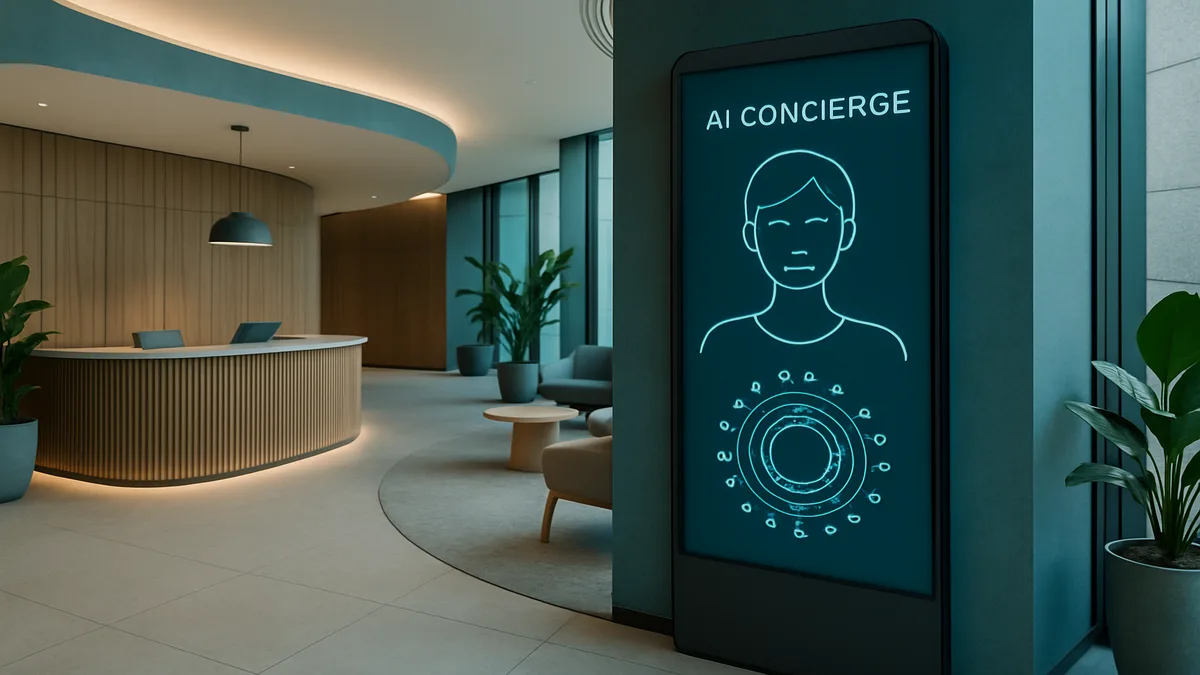
Artificial intelligence in procurement is no longer experimental. It is operational. Weekly generative AI use in procurement increased 44 percentage points from 2023 to 2024. As of late 2024, 94% of procurement executives reported using generative AI at least once weekly. The AI in Supply Chain market was valued at $7.3 billion in 2024 and is projected to reach $63.8 billion by 2030 at a 42.7% CAGR.
What this means for suppliers:
Hotel procurement teams are using AI to benchmark pricing across vendors in real time, evaluate bid responses automatically, predict demand patterns, and flag supplier reliability risks before they become delivery failures. The old model — where a sales rep’s personal relationship with a procurement director could override a competitor’s better specification — is eroding. AI does not have lunch preferences or golf handicaps. It evaluates based on data.
Suppliers need to ensure their product data is clean, structured, and machine-readable. Pricing must be defensible against AI-powered benchmarking. Delivery performance must be consistent because AI-based procurement systems track on-time delivery rates across hundreds of orders and surface the pattern.
On the sales side, AI-powered prospecting tools are enabling suppliers to identify hotels entering renovation or construction procurement windows before traditional intelligence networks surface the opportunity. First-mover advantage in hotel procurement has always mattered. AI is making first-mover advantage faster and more precise.
2. Sustainability Becomes Table Stakes
Sustainability in hospitality has completed the transition from marketing differentiator to procurement requirement. It is no longer a reason hotels choose you. It is a reason they eliminate you from consideration if you lack it.
The evidence:
- Sustainability certifications in hospitality grew 20% between 2022 and 2023
- 73% of tourists prefer hotels with sustainable practices (UNWTO)
- 1,000+ hotels globally achieved LEED certification, with rapid growth continuing
- Marriott: net-zero value chain emissions by 2050 (SBTi verified); reduce Scope 1&2 GHG by 46.2% by 2030
- Hilton: 75% reduction in carbon emissions intensity by 2030; 50% reduction in landfill waste by 2030
- EU bans individually packaged hotel amenities effective 2026
- California AB 1162 already banned small plastic amenity containers
What this means for suppliers:
Every product you sell to a hotel in 2026 should come with sustainability documentation: recycled content percentage, carbon footprint data, end-of-life recyclability, and compliance with relevant certifications (Green Key, EarthCheck, LEED, Cradle to Cradle). If you cannot produce this documentation, you will be excluded from RFPs that require it — and an increasing majority of chain-level RFPs do.
The hotel textile market ($22.43 billion in 2023, growing at 10.5% CAGR) is being reshaped by demand for organic, biodegradable, and recycled materials. The toiletries market ($24.3 billion in 2024) is shifting to bulk dispensers and refillable systems. Suppliers who invested early in sustainable product lines are now winning contracts that commodity suppliers cannot access.
3. Middle East Mega-Projects Create a New Procurement Center
The Middle East hotel pipeline is at an all-time record: 659 projects and 163,816 rooms. Saudi Arabia alone has 349 projects and 94,287 rooms in its pipeline — an all-time high, up 18% in rooms year-over-year. Luxury and upscale properties account for 55% of the Middle East pipeline.
What this means for suppliers:
The Middle East is now the world’s highest-value hotel procurement market on a per-room basis. Luxury hotels in Saudi Arabia, the UAE, and Qatar spend $30,000-80,000 per room on FF&E — several multiples of midscale properties in the U.S. A single 500-room luxury resort in NEOM or the Red Sea coast represents a procurement event of $15-40 million.
But the Middle East market has specific requirements: products must meet local cultural preferences, climate conditions (UV resistance, heat stability, sand-resistant finishes), and increasingly stringent sustainability certifications (Estidama, BREEAM, Mostadam). Suppliers need regional representation, Arabic-language documentation, and the ability to meet delivery timelines to sites that may still be under heavy construction in remote locations.
The Hotel Show Dubai grew from 300 exhibiting firms in 2022 to over 1,000 firms in 2024 — that growth trajectory reflects the scale of supplier interest in the region. If you are not at The Hotel Show Dubai, you are not visible to the buyers placing the largest orders.
4. The Renovation Super-Cycle Peaks
The hotel renovation cycle in 2026 is the largest in a decade. The deferred Property Improvement Plans (PIPs) from the COVID years — when hotel owners negotiated extensions and delays with their brands — are now executing. The PIP backlog is estimated at $12-15 billion in outstanding renovation work. Brand conversions reached a record pace: IHG’s Garner targets 500 hotels, Hilton’s Spark surpassed 100, Marriott’s Four Points Flex is scaling.
PIP costs have increased 30%+ versus pre-COVID levels. Guest room renovations run $8,000-$25,000 per room. Hospitality vendors have reported price hikes of 90-300% on various products since 2020.
What this means for suppliers:
Renovation procurement is different from new-build procurement. Timelines are tighter (the hotel is often operating during renovation, losing revenue on closed rooms). Product specifications must match existing infrastructure (electrical, plumbing, structural dimensions). Disposal of old FF&E is a logistics challenge the supplier can solve — and charge for.
Suppliers who offer turnkey renovation packages (product + installation + disposal + project management) command premium pricing and win business that product-only suppliers cannot.
5. Direct-to-Hotel Digital Sales Reshape Distribution
Manufacturers are increasingly bypassing traditional distributors to sell directly to hotel chains through digital platforms. E-procurement crossed the $1 trillion threshold in 2022 with 18% annual growth. Hotel technology budgets have shifted dramatically: 69% of budget now allocated to new software, up from just 23% in 2022.
What this means for suppliers:
The distributor’s historic value — access to hotel buyers and product aggregation — is being replicated by digital catalogs, virtual showrooms, and AI-powered prospecting tools. Manufacturers who build direct digital sales capabilities capture 15-30% more margin than those selling through traditional distribution.
This does not mean distributors disappear. It means they evolve into logistics, compliance, and technology platforms — or they lose relevance, as we explore in our analysis of how manufacturers are cutting out middlemen. Suppliers at every point in the value chain need a digital-first sales strategy in 2026.
Stop chasing hotels manually. InnLead.ai’s 12 AI agents scan renovation signals, identify procurement contacts, and book meetings with hotel buyers — automatically. Get Early Access
6. Smart Room Technology Drives New Product Categories
Smart hotel room technology is moving from luxury amenity to expected feature, as our IoT and connected room technology guide details. Hilton’s Connected Room program — which lets guests control temperature, lighting, and entertainment from their phone — continues expanding. Wynn Las Vegas put Amazon Echo in every room. Mobile key adoption is projected above 70% by 2025. Hotels report 48% higher return rates for guests experiencing AI-personalized touches.
What this means for suppliers:
Smart room technology creates demand for entirely new product categories:
- Smart thermostats and PTAC controls (IoT-enabled units reduce hotel energy use by 20-45%)
- USB-C/wireless charging integration in nightstands, desks, and lamps
- Voice-activated room controls requiring compatible lighting, HVAC, and entertainment systems
- Smart mirrors with embedded displays for weather, checkout, and service requests
- IoT-enabled minibars with automatic inventory tracking
Traditional FF&E suppliers who add technology integration capabilities — embedding charging ports in furniture, pre-wiring headboards for smart controls, providing furniture with cable management for IoT devices — can capture business that would otherwise go to technology-only vendors. The convergence of furniture and technology is a competitive advantage for suppliers who master it.
7. Localized and Artisanal Amenities Replace Generic Brands
The lifestyle hotel boom is reshaping the amenities market. Accor had 58% of 2024 openings under lifestyle brands. Hyatt acquired Dream Hotels, The Standard, and Mr and Mrs Smith. IHG launched Noted Collection. These brands succeed by offering distinctive, locally-rooted guest experiences — which means generic, mass-produced amenity programs are out.
What this means for suppliers:
Hotels are seeking:
- Locally sourced bath products formulated with regional ingredients (desert botanicals in Arizona, lavender in Provence, tea tree in Australia)
- Artisanal food and beverage items for minibars and room service (local chocolates, craft spirits, regional snacks)
- Custom-branded stationery and in-room materials reflecting each property’s design language
- Curated art programs featuring local artists rather than mass-produced prints
The toiletries market alone ($24.3 billion in 2024, projected $45.3 billion by 2030) is shifting toward premium and eco-friendly products. Suppliers who can offer small-batch, customizable, regionally-relevant product lines will serve the lifestyle segment better than suppliers optimized for uniform mass production.
8. Supply Chain Resilience Becomes a Procurement Criteria
The supply chain disruptions of 2021-2022 — container costs at 5-6x pre-pandemic levels, port backlogs, truck driver shortages — fundamentally changed how hotels evaluate suppliers. Timber prices increased 35% between 2022 and 2024. Lead times on imported furniture stretched to 20+ weeks. Hotels that depended on single-source overseas manufacturers faced project delays and brand penalties.
The resilience response:
- 57% of companies reported nearshoring as a key supply chain strategy in 2023
- 26% of companies globally are planning to nearshore in 2025 (33% in the U.S.)
- Mexico saw a 17% increase in U.S. buyer audit/inspection demand in Q3 2023
- Vietnam saw the strongest reshoring-related sales increase globally
What this means for suppliers:
Hotels now evaluate suppliers not just on price and quality, but on supply chain resilience: manufacturing location diversity, inventory buffer policies, alternative transportation options, and the ability to maintain delivery commitments during disruption.
Suppliers with dual-sourcing capabilities (domestic + offshore), warehouse inventory in key markets, and documented business continuity plans have a structural advantage in procurement evaluations. The cheapest supplier who cannot guarantee delivery is worth less than a moderately priced supplier who always delivers on time.
9. Workforce Shortages Drive Automation Investment
The hospitality labor crisis is not improving. In 2024, 79% of hoteliers reported staff shortages. Housekeeping remains the most critical staffing need, with 50% of hotels ranking it as their top priority. The industry has the highest quit rate of any sector — 4% of workers leaving monthly. Hotels responded by increasing wages (86%), offering flexibility (52%), and expanding benefits (33%), but the structural shortage persists.
What this means for suppliers:
Hotels are investing heavily in automation to compensate for labor shortages. 87% of businesses report new technology was crucial for managing workforce challenges. This creates demand for:
- Automated housekeeping tools (robotic vacuums, UV sanitization systems, automated linen carts)
- Self-service technology (kiosks, mobile check-in hardware, automated payment terminals)
- Simplified maintenance products (click-together flooring instead of glue-down, snap-fit furniture hardware instead of assembled casegoods)
- Long-lifecycle products that reduce replacement and maintenance frequency
- Pre-assembled FF&E that reduces installation labor from days to hours
Suppliers who design products that require less labor to install, maintain, and replace are solving a problem every hotel has. This is a value-based pricing opportunity: a product that saves 40 hours of installation labor per floor renovation is worth a premium.
10. Hotel Brand Consolidation Concentrates Procurement Power
The hotel industry is consolidating. The top 10 hotel companies control an increasingly dominant share of global room inventory. Marriott’s system is approaching 9,000 properties. Hilton exceeded 8,397. IHG, Accor, and Hyatt are all growing through both organic development and acquisition.
Key consolidation moves (2022-2024):
- Hyatt acquired Dream Hotels Group, Mr and Mrs Smith, Standard International, and me and all hotels
- IHG doubled its German footprint via the Novum Hospitality deal
- Choice Hotels pursued (then abandoned) a hostile takeover of Wyndham
- Accor partnered with LVMH on the Orient Express relaunch
- Hilton partnered with Small Luxury Hotels of the World, adding ~450 independent properties
What this means for suppliers:
Brand consolidation concentrates procurement decisions in fewer hands. When Hyatt acquires Standard International, the purchasing decisions for Standard Hotels shift from an independent procurement team to Hyatt’s centralized procurement organization. Suppliers who were on Standard’s vendor list may or may not transfer to Hyatt’s.
This concentration has two implications:
-
The value of brand-level relationships increases. Getting on Marriott’s approved vendor list gives you access to nearly 9,000 properties. The ROI on that relationship-building effort is enormous — but so is the competitive intensity.
-
Independent and lifestyle hotels remain an important segment. Not every hotel is part of a major chain. The growth of platforms like Mr and Mrs Smith (1,500 boutique/luxury properties) and SLH (450 properties) creates network-effect procurement opportunities that are less centralized and more accessible to mid-size suppliers.
Trend Summary Table
| Trend | Impact on Suppliers | Urgency |
|---|---|---|
| AI-powered procurement | Clean data, competitive pricing, consistent delivery | Immediate |
| Sustainability as table stakes | Certifications, documentation, recycled-content products | Immediate |
| Middle East mega-projects | Regional presence, luxury product capability, climate-specific products | High |
| Renovation super-cycle | Turnkey packages, tight timelines, disposal services | High |
| Direct digital sales | Digital catalogs, virtual showrooms, CRM investment | Medium-High |
| Smart room technology | Technology integration into furniture, IoT compatibility | Medium-High |
| Localized/artisanal amenities | Small-batch capability, customization, regional sourcing | Medium |
| Supply chain resilience | Dual sourcing, inventory buffers, business continuity | Medium |
| Workforce-driven automation | Low-labor-install products, pre-assembled FF&E, simplified maintenance | Medium |
| Brand consolidation | Brand-level AVL relationships, scale capabilities | Ongoing |
What Suppliers Should Do in 2026
These ten trends are not independent forces. They interact and compound. The renovation super-cycle (Trend 4) creates procurement events that AI systems (Trend 1) will evaluate, requiring sustainability documentation (Trend 2), with delivery resilience criteria (Trend 8), for hotels that increasingly buy directly from manufacturers (Trend 5).
Understanding these interactions matters because they define the profile of a winning supplier in 2026. It is no longer enough to make a good product at a fair price. The minimum viable supplier for a major hotel brand in 2026 looks like this:
The 2026 Supplier Capability Checklist
Data and digital readiness:
- Product data structured for AI procurement systems (complete specifications, machine-readable pricing, documented performance metrics)
- Digital product catalog with high-resolution imagery, configurators, and specification downloads
- CRM system tracking buyer relationships across brands, management companies, and design firms
- Ability to respond to digital RFPs within brand-specified formats and timelines
Sustainability infrastructure:
- At least one third-party sustainability certification (Cradle to Cradle, GRS, OEKO-TEX, FSC, or equivalent)
- Documented recycled content percentages for key product lines
- Carbon footprint data per product or per order
- Circular economy program (take-back, refurbishment, or recycling) in at least one product category
- Compliance documentation ready for EU, California, and UK plastics regulations
Supply chain resilience:
- Manufacturing capability in at least two geographic regions (or documented partnership with secondary source)
- Warehouse inventory in target markets for top-selling SKUs
- Lead time commitments of 6 weeks or less for standard products
- Business continuity plan documented and available for buyer review
Service capabilities:
- Turnkey delivery and installation for renovation projects
- Mockup room program with rapid sample development (5-10 business days)
- Disposal and recycling services for replaced FF&E
- Dedicated account management for accounts above defined threshold
Market intelligence:
- Active monitoring of construction pipeline data (Lodging Econometrics, STR)
- Tracking of brand conversion announcements (Spark, Garner, Four Points Flex, Noted Collection)
- Attendance at minimum two major trade shows annually (HD Expo, BDNY, The Hotel Show Dubai, HITEC)
- Relationships with top hospitality interior design firms
Prioritizing by Trend Urgency
Not every trend requires immediate action. The urgency column in the summary table above reflects which trends are already driving purchasing decisions today (Immediate), which will drive decisions within 12 months (High), and which are building over 12-24 months (Medium).
For suppliers with limited resources, the priority sequence is:
- Sustainability documentation — this is a gate. Without it, you are excluded from an increasing percentage of RFPs. Get one certification and build your documentation library.
- AI-ready product data — clean, structured, complete. This is the foundation for every digital sales channel and every AI-evaluated bid.
- Renovation positioning — develop turnkey capabilities for the renovation super-cycle while the opportunity is at peak.
- Digital sales channel — build your direct-to-buyer capability alongside existing distribution relationships.
- Everything else — smart room integration, localized amenities, supply chain diversification, and brand relationship building are important but can be developed incrementally.
Suppliers who address these trends in isolation will capture some of the opportunity. Suppliers who build integrated capabilities — AI-ready product data, sustainability-certified products, digital sales channels, turnkey renovation services, and resilient supply chains — will capture a disproportionate share.
The hotel supply market in 2026 is the largest it has ever been. The construction pipeline is at an all-time high. The renovation backlog is executing. New brands are launching and converting properties at record pace. And the procurement infrastructure is going digital faster than most suppliers expected. The question for every supplier is not whether these trends will affect your business. The question is whether your business is evolving as fast as the industry you serve. Get in touch with InnLead.ai to learn how we help suppliers adapt to these shifts.
Use these related guides to keep moving through the same procurement, sales, or market research thread.
Skip the Manual Work
InnLead.ai's 12 AI agents find hotels buying your products, identify procurement contacts, and book meetings -- automatically.
Get Early Access